Fast-Search Coverage in a Small Kit
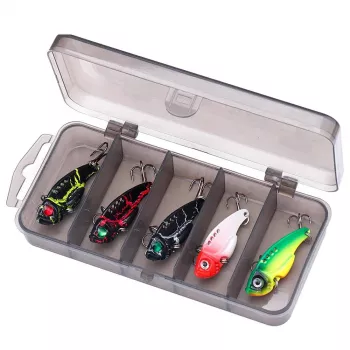
A compact lure kit is easiest to trust when it can both search and trigger without a lot of re-tying or second-guessing. Our team put together this guide around the 5-Pack Metal VIB Spinner Spoon Fishing Lure Set – 7g Sinking Baits because it gives you a simple, repeatable way to cover water: fast sink, tight vibration, and bright flash that can turn a “look” into a strike.
When fish won’t fully commit to soft plastics or bulkier hard baits, a compact metal presentation often stays in the zone longer and provokes reaction bites—especially when you can control depth with a consistent count-down.
What this lure set is designed to do
- Search quickly: the sinking metal profile helps you reach the strike zone fast and keep your retrieve there.
- Trigger reaction bites: vibration plus flash can convert follows into hits when the bite is hesitant.
- Fish multiple depths: count it down, then retrieve at the level fish are actually holding.
- Simplify tackle choices: five lures in one set means fewer “what should I tie on” moments.
Where a 7g sinking metal VIB spoon shines
- Windy banks and open water: the weight helps maintain casting distance and line control.
- Current seams and river runs: sink-and-sweep retrieves let the lure work naturally with the flow.
- Cold-water periods: tighter, vibration-forward presentations often outproduce bulky baits.
- Suspended fish: count-down presentations keep you in the middle of the water column longer.
Quick water-to-lure match guide
| Situation |
Goal |
Best starting move |
| Shallow flats (clear) |
Cover water without spooking fish |
Long cast, quick lift, steady retrieve back |
| Drop-offs / points |
Find the active depth |
Count down in 2–3 second steps until taps start |
| Weedy edges |
Run just above vegetation |
Cast, count down briefly, steady retrieve with occasional pauses |
| River current seams |
Present naturally in flow |
Upstream cast, let it sink, slow retrieve across seam |
Retrieve styles that consistently produce
If you want a straightforward approach, pick one retrieve, test it for 10–15 casts at two depths, then adjust one variable at a time (depth or speed). That discipline is what turns a “random lure” into a dependable tool.
- Steady retrieve: keeps vibration constant; a reliable baseline when fish are roaming or you’re trying to locate them.
- Lift-and-drop: lift the rod tip to make it flutter and vibrate, then let it fall on semi-slack line—many strikes happen as it drops.
- Stop-and-go: short pauses can make following fish commit; watch your line closely during each pause.
- Bottom contact (where appropriate): let it touch down briefly, then lift to imitate a fleeing baitfish—skip this in heavy snag zones.
Simple tackle pairing (light to medium setups)
- Rod: a light-medium to medium spinning or casting rod helps you cast a 7g lure well and keeps treble-hook fish pinned during surges.
- Line: braid with a leader boosts sensitivity for light “ticks”; mono or fluoro can be useful when you want a bit of stretch or extra abrasion resistance around rock.
- Leader length: go longer in clear water; go shorter to keep things simple around cover or in stained water.
- Drag setting: run it slightly lighter than you would with single hooks—trebles hold best with steady pressure, not hard yanks.
How to pick the best color/finish on the water
- Start bright in low light: reflective finishes help fish locate the lure at dawn, dusk, or under cloud cover.
- Tone it down in clear water: a more subtle shine can be better when fish have time to track and inspect the bait.
- Match the forage behavior: when baitfish are small and steady, keep retrieves smooth; when they’re darting, use lift-and-drop.
- Rotate with purpose: change one variable at a time—depth, speed, or finish—so you can quickly identify the pattern.
On-the-bank checklist for fewer missed strikes
If you’re fishing moving water, checking timing can help you stay efficient—NOAA’s Tides & Currents resources are a solid reference. And if you’re hopping between lakes or rivers, it’s worth following the Clean, Drain, Dry guidance to reduce the spread of aquatic invasive species.
At a glance: set details and fit
More in-stock picks from our store
FAQ
How deep can a 7g sinking metal VIB spoon fish effectively?
Depth depends on your line type, current, and retrieve speed, so the most reliable method is to count it down in seconds and note when you start getting taps. Once you find the productive count, repeat it to stay in the same depth band consistently.
What’s the best retrieve for pressured fish that follow but don’t strike?
Use stop-and-go or lift-and-drop with short pauses, and slightly reduce your overall speed so the lure stays in the strike zone longer. Pay close attention during the pause and on the drop, since many bites show up as a small tick or line jump.
Is this lure set a good choice for both freshwater and saltwater trips?
Metal vibration lures are versatile and can work in both environments, as long as you match your depth and speed to the conditions. After any salt or brackish use, rinsing and fully drying helps keep the lure’s hardware performing well.
Recommended for you




Leave a comment