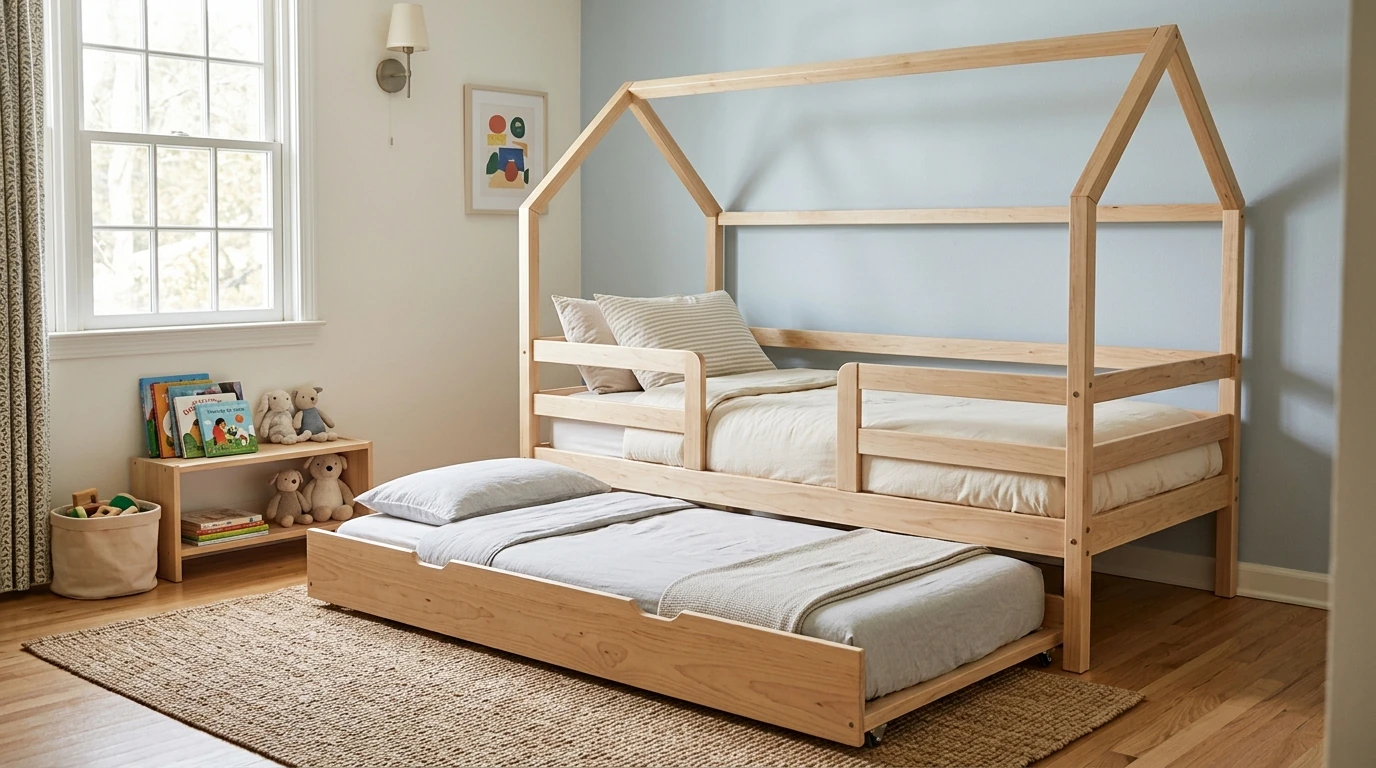
A kid’s room works hardest when it can flex—sleeping, playing, hosting sleepovers, and still feeling calm at bedtime. Our Charming Twin House Bed with Trundle and Guardrails, No Box Spring Needed brings that balance with a cozy house-frame silhouette, everyday guardrail confidence, and a pull-out trundle that keeps an extra sleep space ready without taking over the room.
If you’re trying to avoid the “two full-time beds in one small room” problem, this setup is a practical middle ground: one main twin for nightly sleep, plus a second sleep surface that appears only when you need it.
A pull-out trundle is one of the simplest ways to add sleepover capacity while keeping the room usable day to day. When it’s tucked away, you get back your open play area; when it’s pulled out, you have a true second sleeping spot—no inflatables to inflate, no furniture to rearrange.
| Scenario | How the trundle helps | Room benefit |
|---|---|---|
| Sleepovers | Extra sleep space ready in minutes | No need for air mattresses or rearranging furniture |
| Siblings sharing a room | Second sleeper available while keeping one main bed | More open floor area during the day |
| Overnight guests | A practical backup bed for family visits | Guest-ready without dedicating a guest room |
Guardrails do more than “check the box” on safety—they can reduce bedtime worry for kids who are newly out of a crib or toddler bed. For you, rails are an everyday layer of reassurance, especially during the first months of a transition when sleep can be restless.
For additional general safety guidance, you can review consumer resources from the U.S. Consumer Product Safety Commission (CPSC) and safe sleep recommendations from the American Academy of Pediatrics.
Choosing a no-box-spring bed frame keeps the overall profile cleaner and can make a kid’s room feel less crowded. It also simplifies setup: fewer components to buy, haul upstairs, and align during assembly.
Before you check out, it helps to think of the bed as a system: main mattress + trundle mattress + bedding. Getting those choices right upfront reduces sliding, bunching sheets, and trundle snags.
| Item to verify | Why it matters | What to do |
|---|---|---|
| Twin mattress dimensions | Proper fit reduces shifting and gaps | Confirm standard twin sizing and a snug fit in the frame |
| Main mattress height | Maintains practical guardrail coverage | Avoid extra-tall profiles that sit near the top of rails |
| Trundle mattress thickness | Ensures the trundle rolls and stores easily | Select a low-profile option that clears the frame when stowed |
| Bedding fit | Keeps sheets secure and comfortable | Use deep-pocket sheets only if mattress height requires it |
No—this bed is designed to support a mattress without a box spring. Place your twin mattress directly on the supported base as directed in the included instructions, and choose a mattress height that keeps the guardrails effective.
Avoid overly tall mattresses that reduce how much guardrail remains above the sleeping surface. Pick a height that leaves the rail meaningfully above the mattress and follow any safety notes included with the bed.
Yes, the trundle is meant to function as an extra sleep surface when you need it. Choose a compatible low-profile trundle mattress, keep the roll-out area clear, and store bedding nearby so setup stays quick.


Leave a comment