Wooden Cheese Threading Game for Calm Fine-Motor Play
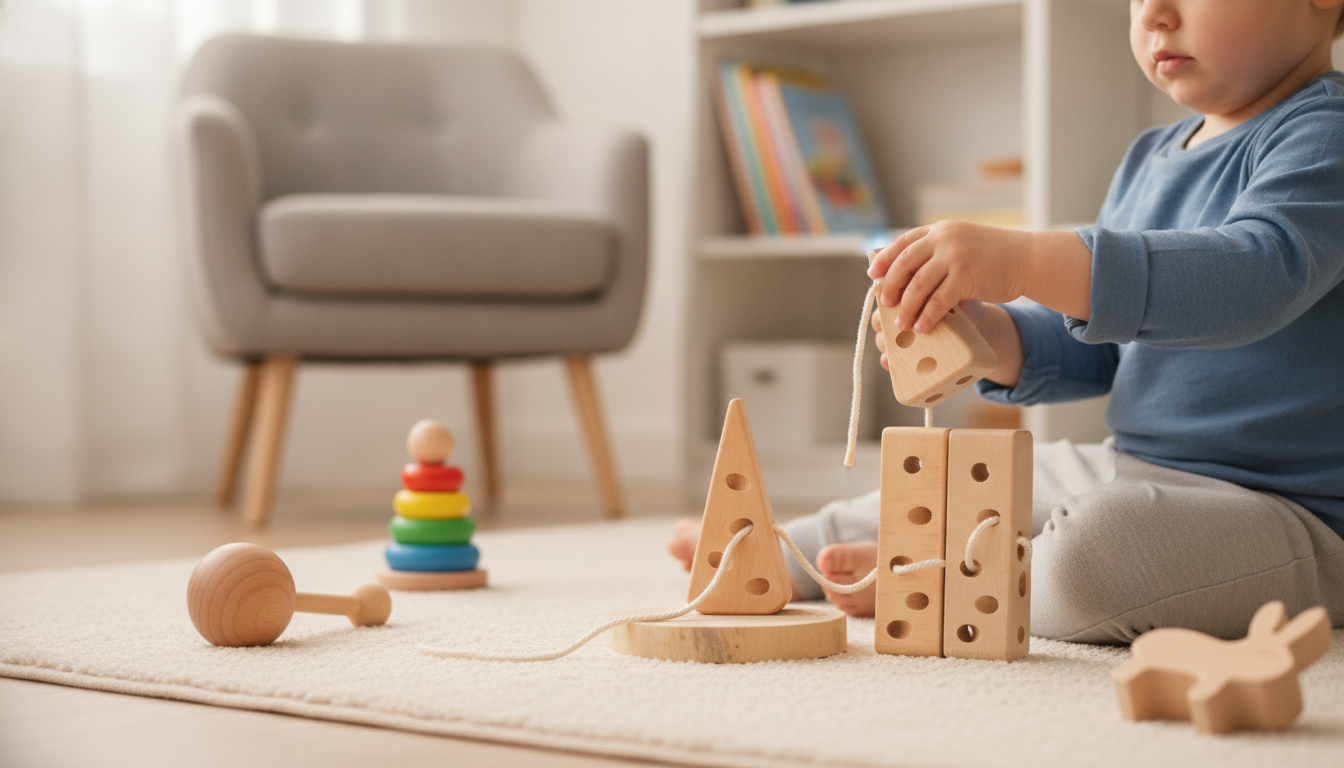
Wooden Cheese Threading Game: A Simple Lacing Toy for Calm, Skill-Building Play
A hands-on lacing activity that turns fine-motor practice into play. The Wooden Cheese Threading Game supports dexterity, coordination, and early learning routines through simple, repeatable threading patterns that kids can explore independently or with a caregiver. It’s the kind of quiet tabletop toy that feels “busy” in the best way—engaging enough to hold attention, but predictable enough to be soothing.
What the game is and how it works
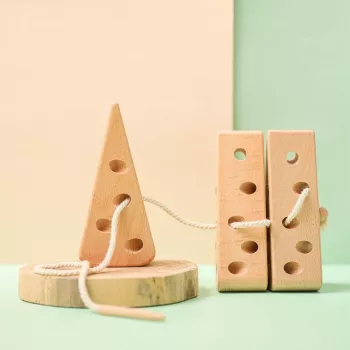
This threading set is built around a wooden “cheese” piece with holes positioned for lacing. A child uses a lace/cord to move in and out of the holes, creating loops, borders, and paths. The core action is straightforward—insert, pull through, guide, repeat—yet it naturally challenges small hands to coordinate movements with intention.
- A wooden “cheese” piece features holes designed for threading a lace or cord through and around the shape.
- Kids practice pulling, guiding, and re-inserting the lace to complete loops, borders, or simple patterns.
- Play can be open-ended (any path) or structured (follow a pattern, count holes, or match a sequence).
- Works well as a calm tabletop activity for short sessions or as part of a rotation of quiet-time toys.
Because it’s self-contained and easy to reset, it also fits nicely into routines: a “start your morning with one border,” a pre-dinner quiet activity, or a station toy in a classroom corner.
Skills this activity supports
Threading toys are popular for a reason: they provide meaningful repetition without needing screens, batteries, or lots of setup. The repeated “in, out, pull” sequence gives kids a clear goal and an immediate result they can see and feel.
- Fine-motor control: grasping, pinching, and controlled pulling through resistance.
- Hand–eye coordination: aligning the lace tip with holes while tracking where it emerges.
- Bilateral coordination: one hand stabilizes the board while the other threads and pulls.
- Early learning extensions: counting holes, following left-to-right paths, naming colors (if applicable), and simple problem-solving when the lace tangles.
- Self-regulation: repetitive lacing motions can encourage focus and calm engagement.
Play goals and easy ways to use them
| Goal | Try this prompt | What to watch for |
|---|---|---|
| Dexterity | “Thread every other hole.” | Controlled insertion without forcing |
| Coordination | “Go around the edge like a border.” | Stabilizing with the non-dominant hand |
| Counting | “Count each hole as the lace goes through.” | One-to-one correspondence |
| Patterning | “Make a repeating in-and-out rhythm.” | Recognizing and repeating sequences |
| Patience | “Fix a tangle and continue.” | Coping with small frustrations |
Who it’s great for
- Kids who enjoy tactile, hands-on puzzles and repeated actions.
- Families looking for a screen-free activity that packs easily for travel or waiting rooms.
- Classrooms or therapy settings needing a simple manipulative for stations and skill practice.
- Gift-givers seeking a small, practical toy that encourages independent play.
It’s especially helpful for children who like having “something to do” with their hands while listening to a story, sitting through a lesson, or winding down after active play.
Ways to play (from beginner to challenge mode)
One of the easiest ways to keep a threading toy fresh is to vary the goal while keeping the same materials. Try rotating between these modes depending on attention span and comfort level:
- Free-threading warm-up: let the child choose any holes, focusing on the motion and success.
- Edge-tracing: thread around the outside perimeter to create a “stitched” border.
- Hole order challenge: pick a start and end hole and plan a route without backtracking.
- Speed vs. accuracy: time a round only after the movement is comfortable; prioritize smooth motion over rushing.
- Story play: pretend the lace is “mouse tail” or “string,” creating imaginative prompts without changing the core task.
If frustration shows up, an easy win is to reduce the demand: choose fewer holes, switch to a border, or offer a short “team turn” where an adult starts the first two holes and the child continues.
Safety and supervision notes
Threading toys can be wonderfully absorbing, but the lace/cord component means safety checks matter—especially with younger children. For general guidance, the U.S. Consumer Product Safety Commission offers practical toy safety recommendations at CPSC Toy Safety, and developmental readiness guidance can be explored via HealthyChildren.org (AAP) milestones.
For additional background on toy safety standards, see ASTM’s toy safety standards overview.
Care, storage, and keeping the lace from tangling
At-a-glance product details
Purchase snapshot
| Detail | Info |
|---|---|
| Product page | https://unitare.com/wooden-cheese-threading-game/ |
| Price | 12.67 USD |
| Stock status | In stock |
| Product ID | 789479 |
More in-stock finds to round out a gift or home setup
- 23-Piece Professional Makeup Brush Set — a tidy, useful upgrade for a vanity or travel bag.
- Elevated Ceramic Pet Bowl with Solid Wood Stand — a clean, sturdy option for pet feeding areas.
- Luxury Large Dog Stroller — a premium pick for pet parents who want a more supportive way to get outside.
FAQ
What age is a threading game appropriate for?
Follow the manufacturer’s age guidance and use supervision for younger children due to the lace/cord component. Threading is generally best for kids who can manage a controlled grasp (like a developing pincer grip) and who aren’t likely to mouth the lace or parts.
How can this be used for learning beyond motor skills?
Try counting holes as the lace passes through, making simple repeating patterns, or using direction words like “in/out” and “left/right.” You can also set small challenges (every other hole, border stitching) or add storytelling prompts that keep the same threading action.
What should be checked before letting a child play?
Inspect the wooden piece for rough spots and check the lace tip for fraying so threading stays smooth. Supervise younger children, and store the lace neatly afterward to reduce tangles and prevent pieces from getting misplaced.














Leave a comment