Rotatable Carabiner Treat Pouch for Fast Dog Training
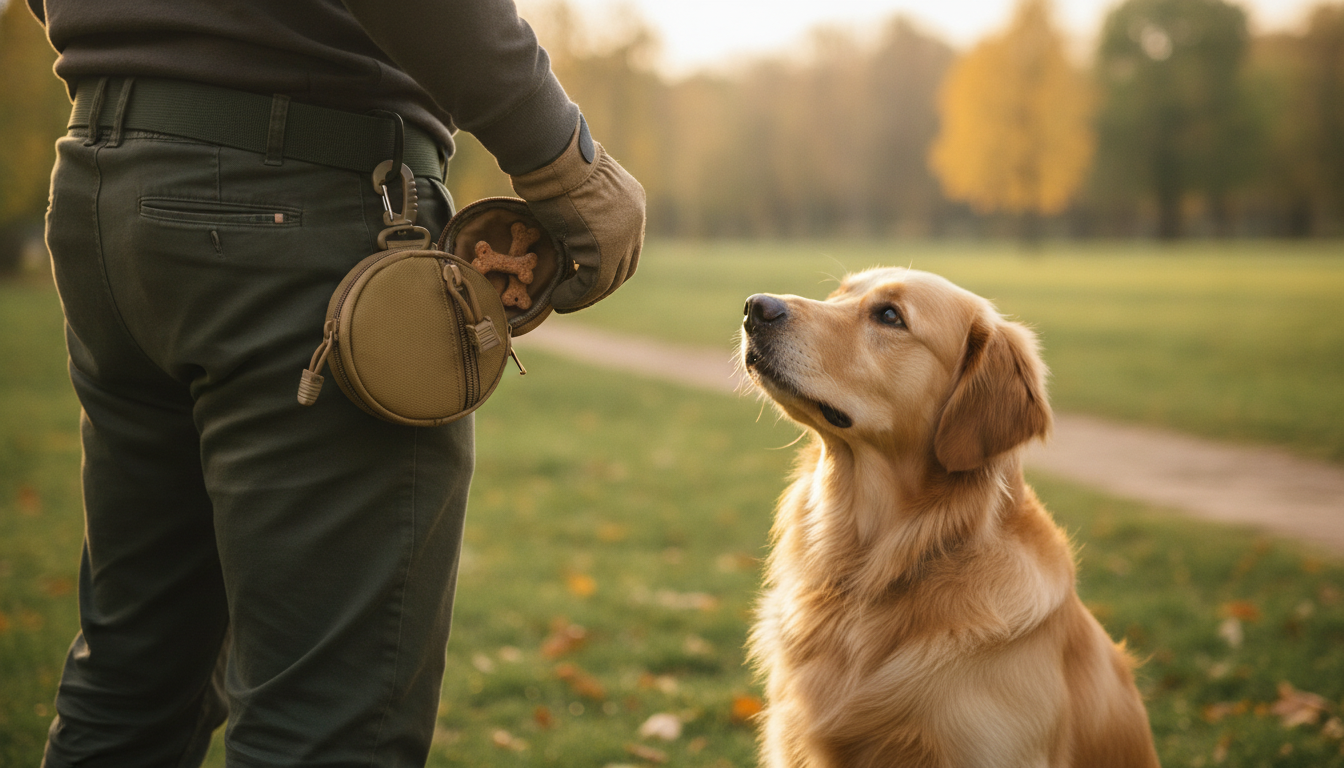
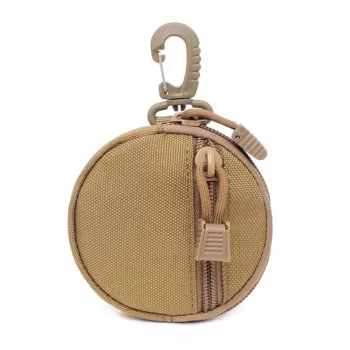
Portable Tactical Dog Treat Pouch with Rotatable Carabiner for Training
A treat pouch works best when it stays secure, opens fast, and keeps rewards within easy reach. This portable tactical-style pouch adds a rotatable carabiner so it can hang naturally from a belt loop, leash handle, or pack strap while staying oriented for quick access during drills, walks, and everyday manners practice. When rewards arrive on time, dogs connect the behavior to the payoff more clearly—making positive reinforcement smoother and more consistent.
What makes a rotatable carabiner useful during training
A fixed clip can work, but it often forces the pouch to sit at odd angles as you move. A rotatable carabiner solves the little problems that add up during real sessions.
- Helps the pouch hang comfortably as the handler moves, reducing twisting and flipping when changing direction.
- Allows clipping to different attachment points (belt loop, D-ring, backpack strap) without awkward angles.
- Keeps the opening positioned consistently for faster treat delivery and clearer timing.
- Reduces tugging on clothing compared with a fixed clip when the leash hand switches sides.
- Useful for multi-dog or sport setups where gear is frequently repositioned.
Design highlights to look for in a tactical-style treat pouch
Tactical-style doesn’t have to mean bulky. The most useful pouches are the ones that disappear until the exact moment you need them.
- Easy-open access: an opening that can be operated one-handed while maintaining leash control.
- Secure closure: helps prevent spills when bending, jogging, or rewarding from different positions.
- Durable materials: abrasion-resistant fabric and reinforced seams for frequent outdoor use.
- Attachment flexibility: carabiner, belt loop compatibility, or clip points for varied carry styles.
- Low-profile shape: sits close to the body to avoid swinging into the dog or snagging on obstacles.
If you’re building a simple training kit, the Portable Tactical Dog Treat Pouch with Rotatable Carabiner for Training is an easy grab-and-go option for walks, classes, and quick reinforcement around the house.
Best ways to wear it: belt, leash, backpack, or pocket alternative
Carry position changes how quickly you can pay your dog—and how much your dog stares at the treat source. A rotatable carabiner makes it easier to fine-tune placement without fighting the angle.
- Belt loop carry: stable for structured sessions and classes; keeps treats near the reward hand.
- Leash handle carry: convenient for casual walks; reduces forgotten gear when stepping out quickly.
- Backpack strap carry: helpful for hikes; keeps rewards accessible without removing a pack.
- Front-of-hip position: supports fast reinforcement for loose-leash walking and heelwork.
- Behind-the-hip position: keeps treats out of the dog’s sight line when practicing impulse control.
Carry positions and when they work best
| Carry option | Best for | Why it helps |
|---|---|---|
| Belt loop (front hip) | Loose-leash walking, basic cues | Fast access for precise timing |
| Belt loop (rear hip) | Impulse control, reactivity setups | Less treat-fixation and fewer mugging attempts |
| Clipped to leash handle | Quick neighborhood walks | Minimal setup; easy to grab and go |
| Backpack strap | Hikes, long outings | Accessible rewards without taking off gear |
Treat management that keeps sessions clean and consistent
A great pouch helps, but treat strategy is what keeps training tidy and repeatable from session to session.
- Use small, soft rewards for rapid repetition and easier chewing between reps.
- Separate high-value and low-value rewards (if using one pouch, pre-mix strategically or rotate treat types between sets).
- Prevent crumbs and residue by portioning treats into a small liner bag if needed.
- Refill before the session starts to avoid fumbling mid-exercise.
- End-of-session routine: empty leftovers, wipe interior, and air-dry to reduce odor buildup.
For treat ideas and safety pointers, reliable guidance from the American Kennel Club and VCA Animal Hospitals can help you choose rewards that are practical for frequent reinforcement.
Training scenarios where quick access matters most
Fast access isn’t about rushing—it’s about hitting the right moment. The more precisely you can reward, the easier it is for your dog to understand what earned the treat.
- Loose-leash walking: rapid reinforcement the moment slack appears.
- Recall practice: reward immediately upon arrival to strengthen the return.
- “Leave it” and impulse control: deliver rewards from a consistent location to avoid hand-luring.
- New environments: higher reinforcement rate helps dogs stay engaged around distractions.
- Trick training and shaping: frequent, well-timed treat delivery speeds learning.
Positive reinforcement works best when it’s consistent and timely; the Humane Society of the United States offers a helpful overview of reward-based training principles that pair well with treat delivery tools.
Care, cleaning, and durability tips
Pairing ideas for a smoother daily routine
If you’re also refining everyday routines at home, the Elevated Ceramic Pet Bowl with Solid Wood Stand pairs nicely with structured feeding and can help keep mealtimes neat and consistent.
FAQ
Can a treat pouch be used for wet or smelly treats?
Yes, but it’s best to use a small liner bag or compact container inside the pouch to keep residue off the fabric. Choose treats that are easier to wipe up when possible, and clean and fully dry the pouch after use to prevent odor buildup.
Where should the treat pouch sit for loose-leash walking training?
Front-of-hip placement on the side you reward from is usually the fastest for timing and keeps your hand path consistent. If your dog gets fixated on the pouch, slide it slightly behind the hip to reduce staring and mugging while still keeping it reachable.
How many treats should be carried for a typical session?
For a 5–15 minute session, many handlers do well with roughly 20–60 small pieces depending on how often they reward and how distracting the environment is. Use tiny pieces to stretch your supply and remember to count training treats as part of your dog’s daily calories.












Leave a comment