Critical Thinking eBook: Problem-Solving Tools & Teasers
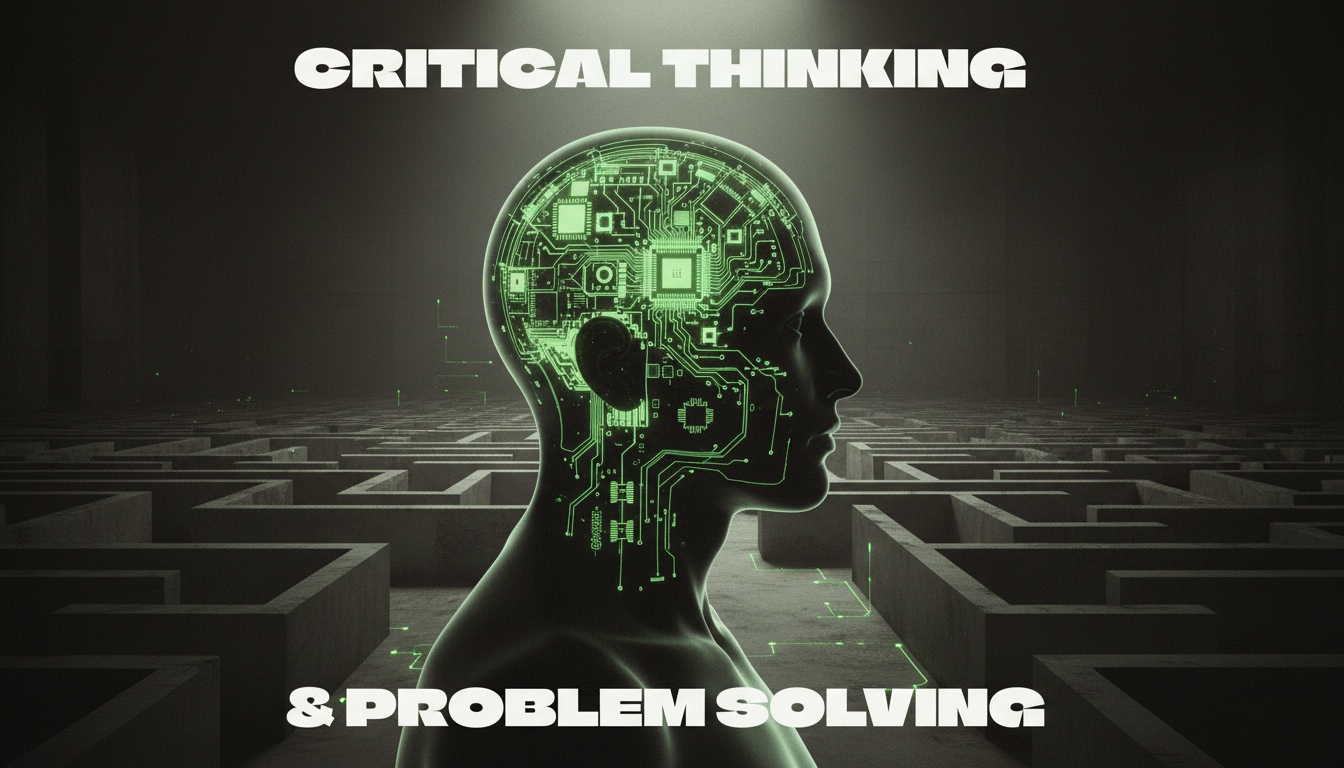
Critical Thinking & Problem Solving eBook: A Practical Path to Smarter Decisions
Better decisions come from clearer thinking, structured questions, and practice under real-world constraints. This digital guide is built to strengthen everyday reasoning with approachable frameworks, brain teasers, and life-skill exercises that transfer to work, school, finances, relationships, and personal goals. Instead of relying on vague “common sense,” it helps build a repeatable way to clarify what’s true, test what’s assumed, and choose actions that hold up under pressure.
What strong thinking looks like in everyday life
Strong critical thinking isn’t about sounding smart; it’s about making fewer avoidable mistakes. In daily decisions, it often shows up as a handful of consistent habits:
- Separating facts, assumptions, and interpretations before acting.
- Noticing common traps: jumping to conclusions, confirmation bias, and overconfidence.
- Defining the real problem (not just the most urgent symptom).
- Choosing a decision rule: optimize, satisfice, or experiment safely.
- Following through with a quick review: what worked, what didn’t, what to change next time.
If you’ve ever re-litigated a choice after the outcome (“How did I not see that coming?”), a structured approach helps. Critical thinking is widely described as purposeful, self-regulating judgment that draws on evidence and reasoning (see the American Psychological Association definition), and it becomes more reliable when paired with deliberate practice and feedback.
What’s inside the digital download
The guide is designed to feel practical from the start: a short concept, a tool, and an application to something realistic. Inside you’ll find:
- Guided lessons that build from fundamentals (clarity, logic, evidence) to advanced judgment under uncertainty.
- Step-by-step problem-solving templates for personal and professional scenarios.
- Brain teasers and puzzles designed to train pattern recognition and flexible thinking (with explanations).
- Practical exercises that connect reasoning skills to communication, negotiation, and planning.
- A repeatable practice loop: learn a tool, apply it to a case, reflect, and refine.
For readers who like to go deeper, the broader “what counts as good reasoning” conversation is explored in sources like the Stanford Encyclopedia of Philosophy entry on critical thinking. The eBook takes that big idea and turns it into concrete routines you can actually use when time and attention are limited.
Skills you can practice immediately
Some thinking skills improve fastest when they’re tied to today’s decisions—emails, purchases, plans, and conversations—rather than abstract debates. This guide focuses on high-transfer abilities:
- Question design: turning vague concerns into answerable questions.
- Option generation: expanding choices before narrowing to the best one.
- Evidence checks: assessing sources, missing data, and confidence level.
- Trade-off thinking: comparing options by outcomes, effort, risk, and reversibility.
- Second-order effects: anticipating what happens after the first result.
- Communication clarity: stating reasoning so others can challenge it constructively.
Learning research consistently highlights that skills “stick” when they’re practiced across contexts and revisited over time, rather than crammed once. That idea is emphasized in the National Academies’ overview of learning principles in How People Learn II (Executive Summary).
A simple toolkit for better decisions
When a decision feels messy, a good tool does two things: it slows you down at the right moment, and it forces a clearer structure. Here are five core tools you can reuse endlessly:
- The 5 Whys: uncover root causes by repeatedly asking why a problem occurs.
- Premortem: imagine a future failure and list reasons it happened to reduce risk early.
- Reversibility test: treat irreversible choices more carefully than reversible ones.
- Base-rate check: compare the situation to similar cases instead of relying on gut feeling.
- Criteria-first selection: set decision criteria before evaluating any option to reduce bias.
Common situations and the tool that fits best
| Situation | Best-fit tool | What it helps prevent |
|---|---|---|
| Recurring issue that never fully goes away | 5 Whys | Fixing symptoms instead of causes |
| High-stakes choice with many unknowns | Premortem | Underestimating risks and blind spots |
| Tempting shortcut or impulse purchase | Reversibility test | Regret from hard-to-undo decisions |
| Conflicting advice from others | Base-rate check | Overweighting anecdotes and vivid stories |
| Team decision with strong opinions | Criteria-first selection | Moving goalposts to justify a preferred answer |
Why brain teasers help (and how to use them well)
Brain teasers are most useful when you treat them like a gym session for attention and reasoning—not a test of identity. Used well, they reinforce skills that show up in meetings, essays, and negotiations:
- They train cognitive flexibility: switching strategies when the first approach fails.
- They encourage deliberate thinking: pausing, testing, and revising assumptions.
- They build comfort with uncertainty: holding multiple hypotheses before committing.
- They strengthen explanation: learning to justify each step, not just the final answer.
- Best practice: focus on the reasoning path, then replay the puzzle with a new method.
Using the guide as a weekly practice plan
Digital download details and who it’s for
Explore the full download here: Critical Thinking & Problem Solving eBook – Digital Download Guide.
More in-stock picks you may like
- 23-Piece Professional Makeup Brush Set
- Elevated Ceramic Pet Bowl with Solid Wood Stand
- Luxury Large Dog Stroller
FAQ
Is this eBook beginner-friendly if critical thinking feels hard right now?
Yes. It starts with fundamentals, uses step-by-step templates, and includes clear explanations for puzzles and exercises. For best results, begin with short sessions and focus on one tool per week.
Does it include exercises and answers, or only explanations?
It includes practice activities (including brain teasers) designed to build reasoning, along with guidance and explanations so you learn the method instead of memorizing outcomes.
How fast can results show up in everyday decisions?
Small improvements often show up after a week or two of consistent practice. Bigger gains typically come from repeating the same tools across real decisions and reflecting on outcomes over time.















Leave a comment