10-Inch Collapsible Dobsonian: Big Views, Easier Travel
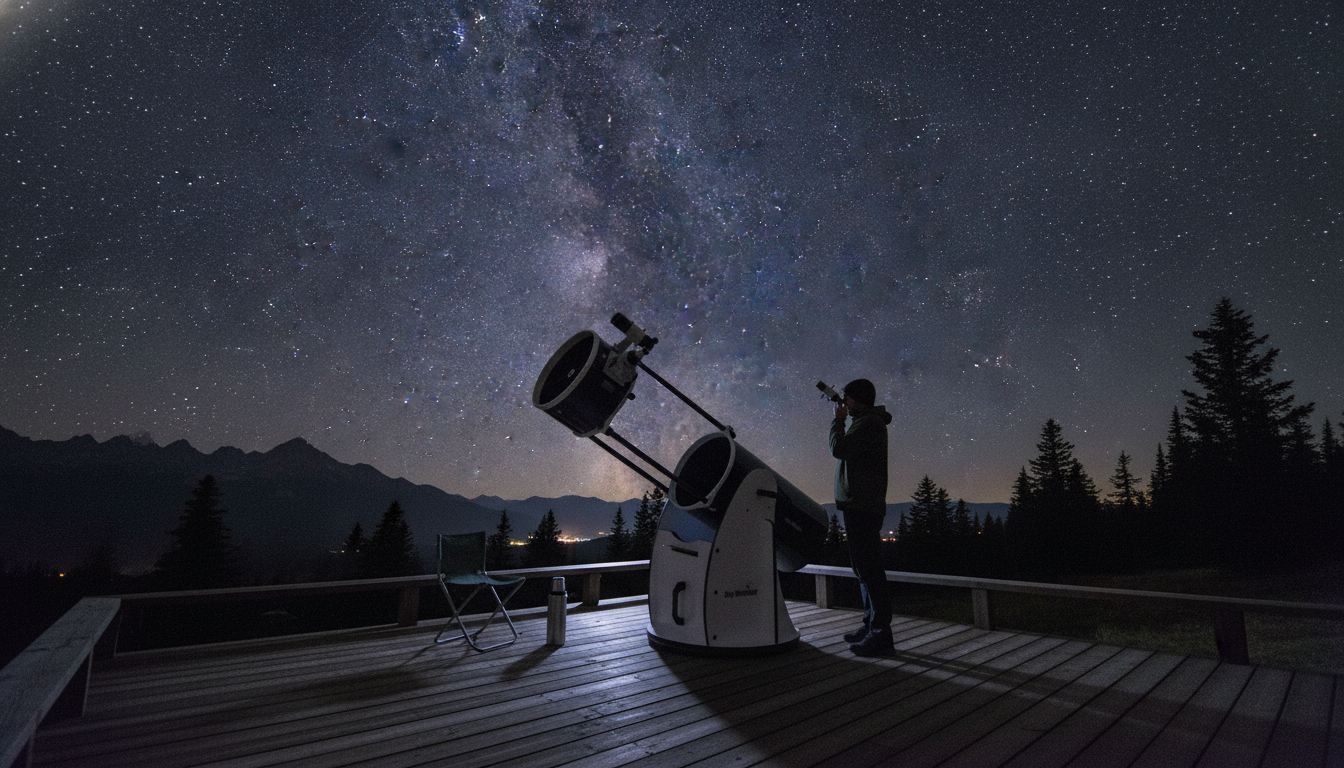
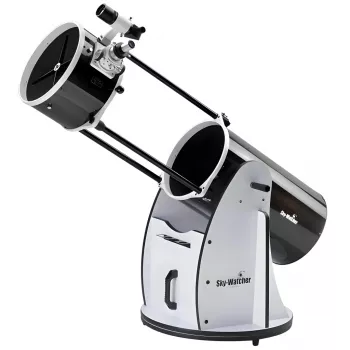
10″ Collapsible Dobsonian Telescope: Big Aperture in a Travel-Friendlier Design
A 10-inch collapsible Dobsonian pairs the light-gathering punch that makes deep-sky objects stand out with a tube that packs down for easier storage and transport. The idea is simple: keep the same mirror size, but reduce the “where do I put this?” problem that often comes with larger solid-tube scopes. Below is a practical look at what the collapsible build changes (and what it doesn’t), what you can expect to see, and how to set up for a smooth first night.
What a collapsible Dobsonian is (and why it matters)
A Dobsonian is a Newtonian reflector telescope riding on a simple alt-azimuth base. It’s known for being stable, intuitive to aim, and cost-effective for getting a lot of aperture. The “collapsible” part refers to the optical tube assembly: instead of a single fixed-length tube, the upper section is supported by extendable struts or a truss-like framework so the telescope can shrink for storage.
- Dobsonian mount basics: A low-profile base that moves up/down and left/right with a smooth “push-to” feel—great for quick pointing and casual sessions.
- Collapsible tube basics: The tube shortens for transport but extends to the full optical length for observing.
- What stays the same: Aperture-driven brightness and resolving power, plus the same intuitive manual tracking style.
- What changes: Packing size, setup steps, and a bit more sensitivity to collimation and stray light if nearby lights can enter the open structure.
What a 10-inch aperture can show on a typical night
Observation expectations by target type
| Target | What typically improves with 10″ | What still limits the view |
|---|---|---|
| Moon | High-contrast crater and rille detail | Atmospheric seeing at high power |
| Jupiter/Saturn | More detail and steadier brightness at moderate power | Thermal cooldown; seeing |
| Nebulae | Brighter cores; more structure with filters | Light pollution; transparency |
| Star clusters | Denser star fields; partial-to-strong resolution of globs | Tracking at high power; sky quality |
| Galaxies | More targets within reach; larger apparent size | Sky darkness; surface brightness limits |
Collapsible design: transport, setup, and stray-light control
Getting the most out of the optics: cooldown and collimation
- Cooldown: Give the primary mirror time to equilibrate. Planetary detail usually improves as the mirror temperature settles and internal tube currents calm down.
- Collimation basics: Check secondary and primary alignment before pushing magnification. A few minutes here can prevent an hour of “why won’t this focus?” frustration.
- Tools that simplify the process: A simple collimation cap works, while a Cheshire or well-used laser can speed things up. For a clear walkthrough, see Sky & Telescope’s collimation basics.
- Collimation cadence: After transporting the scope—or after collapsing and expanding again—do a quick re-check.
- Signs it’s off: Stars won’t snap to a clean focus, and planets look mushy even when the air seems steady.
Choosing accessories that match a 10-inch Dobsonian
- Eyepiece range: Start with a low-power wide-field eyepiece for finding targets and framing large objects, plus a mid/high-power option for lunar and planetary detail.
- Finder options: A red-dot finder is fast and simple; an optical finder helps with star-hopping. Under darker skies, combining both can be very efficient.
- Filters: A narrowband nebula filter can boost contrast on emission nebulae, but it won’t “erase” heavy light pollution. For background on light pollution and what helps, the International Dark-Sky Association is a solid reference.
- Comfort: An observing chair improves steadiness and reduces fatigue, especially at higher magnifications.
- Basic care: Keep dust caps on during storage; clean optics only when necessary and with appropriate techniques. NASA’s skywatching hub is a helpful companion for planning sessions: NASA — Observe the Night Sky.
Product spotlight: 10″ Collapsible Dobsonian Telescope
If the goal is large-aperture performance without committing to the storage length of a solid tube, the 10″ Collapsible Dobsonian Telescope is built around that exact idea. It’s a strong match for backyard sessions and for trips to darker sites, where a 10-inch mirror can make star clusters and nebulae noticeably more textured and rewarding.
Helpful extras from the same shop (optional): If you want a rolling way to move gear from a garage to the yard, a multipurpose carrier like the Luxury Large Dog Stroller can function as a convenient transport cart for accessories and cases. For keeping non-optical parts tidy (like bases, caps, and storage bins), soft brushes can be handy—just avoid touching mirrors or lenses with general-purpose tools; the 23-Piece Professional Makeup Brush Set can serve for gentle dusting of exterior surfaces and gear containers.
At-a-glance details
| Item | Details |
|---|---|
| Model | 10″ Collapsible Dobsonian Telescope |
| Availability | In stock |
| Price | $2047.49 USD |
| Product page | https://unitare.com/10-collapsible-dobsonian-telescope/ |
Storage and handling tips to keep performance consistent
FAQ
Is a collapsible Dobsonian harder to collimate than a solid-tube Dobsonian?
The collimation steps are essentially the same, but a collapsible design may need checks more often because collapsing/expanding and transport can slightly shift alignment. With a simple routine and a basic tool (cap, Cheshire, or a properly used laser), it becomes a quick pre-session habit.
How long does a 10-inch Dobsonian need to cool down?
A practical range is about 30–90 minutes depending on the temperature difference between storage and outdoor air, plus airflow around the mirror. The benefit shows up most on planets and fine lunar detail, where thermal turbulence can soften the view.
Does a collapsible tube reduce image quality?
Not inherently—aperture and optical quality drive what the telescope can resolve. Image quality is more affected by collimation, stray light entering the open structure, wind vibration, and whether the mirror has fully cooled; a light shroud and careful setup help a lot.











Leave a comment