110V/220V Instant Wall Water Heater w/ LCD & Remote
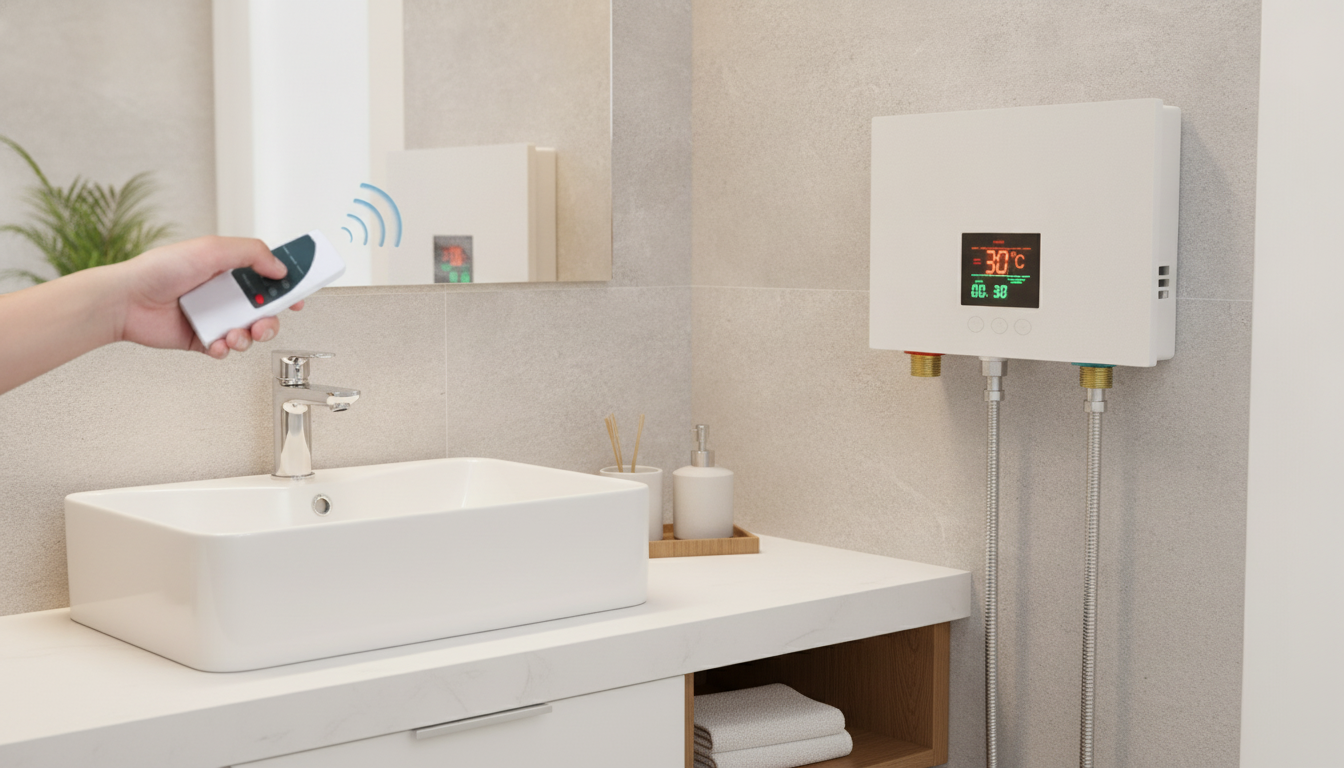
110V/220V Instant Wall-Mounted Electric Water Heater with LCD & Remote Control
An instant, wall-mounted electric water heater is made for on-demand hot water without the bulk of a storage tank. This dual-voltage model (110V/220V) adds flexibility for different electrical setups, plus an LCD screen for quick temperature visibility and a remote control for easy adjustments. It’s a strong fit for compact homes, apartments, guest suites, and point-of-use installs where space is limited and temperature control needs to be simple.
What It Is and Where It Fits Best
Unlike a traditional tank heater that keeps gallons of water hot around the clock, an instant electric unit heats water only when you open the tap. Water passes through the heater, the elements ramp up, and hot water is delivered as long as the unit has enough electrical power to match the flow rate and required temperature rise.
- On-demand operation: Heats while water flows, which can reduce energy waste from standby heat loss.
- Wall-mounted footprint: Frees up floor space and can shorten plumbing runs when installed near the fixture.
- LCD display: Helps confirm temperature at a glance and makes fine-tuning simpler.
- Remote control: Convenient when the unit is mounted high, tucked in a utility corner, or serving a kitchenette.
- Typical placements: Small bathroom sinks, laundry areas, kitchenette sinks, guest suites, and supplemental hot water “zones.”
Key Features to Look For in Daily Use
Daily comfort with an instant heater depends on more than “instant hot.” Voltage choice, temperature stability, and how often you change settings all influence how satisfied you’ll be.
- Dual-voltage (110V/220V): Can make replacements or upgrades easier across different homes, but the circuit, breaker, and wire gauge must match the selected voltage and the manufacturer’s specifications.
- LCD temperature readout: Useful when incoming water temperature shifts by season—especially in winter, when the same flow rate may feel cooler.
- Remote adjustments: Makes it quick to switch between tasks (like handwashing vs. dishwashing) without walking over to the unit.
- Less standby loss: Because there’s no storage tank, energy is primarily used during active draws—often a practical advantage for intermittent use.
- Compact point-of-use placement: When installed close to the faucet, you can reduce pipe heat loss and cut down on the wait for hot water.
Instant vs. Tank Water Heater (Practical Differences)
| Factor | Instant Wall-Mounted Electric | Traditional Tank Heater |
|---|---|---|
| Hot water delivery | Heats as water flows; limited by flow rate and power | Stores a set volume; can run out during long use |
| Energy behavior | No standby tank losses; energy used during draw | Standby losses as stored water cools |
| Space needs | Small, wall-mounted footprint | Requires floor space and clearance |
| Best for | Point-of-use, small homes, supplemental zones | Whole-home with steady simultaneous demand |
| Temperature control | Often more precise with digital settings | Typically dial-based; slower to react |
Installation and Electrical Planning (Safety-Critical)
Electrical planning is the deciding factor for performance and safety. Before installation, confirm your home’s available voltage and the capacity of the electrical panel. In many setups, 220V operation can provide stronger heating performance at usable flow rates, but only when installed with the correct dedicated circuit and protective devices.
- Confirm voltage and capacity: Choose 110V or 220V only if your wiring, breaker, and panel are appropriate for that configuration.
- Follow local code: Use proper grounding and protection (often GFCI/RCD near wet locations) and meet all requirements for wire gauge and breaker sizing.
- Mount securely: Install on a solid wall with suitable anchors and leave clearance for service access per the manufacturer’s guidance.
- Locate near the fixture: Shorter pipe runs typically mean faster hot water delivery and less heat loss.
- Protect against sediment/scale: Consider inlet filtration if your water contains grit or sediment; hard water areas may need periodic descaling.
- When in doubt: A licensed electrician and plumber can help ensure safe, code-compliant installation.
For broader guidance on water-heating efficiency and options, reference the U.S. Department of Energy’s water heating resources.
Performance Expectations: Temperature Rise, Flow, and Comfort
Care, Maintenance, and Longevity
For safety information on hot water temperatures and scald prevention, see the U.S. Consumer Product Safety Commission’s scald burn guidance.
Product Snapshot
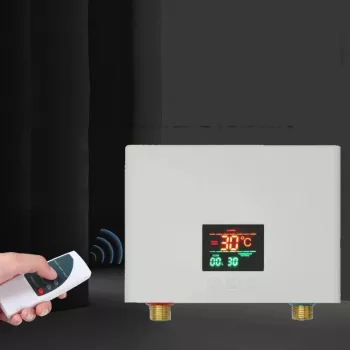
110V/220V Instant Wall-Mounted Electric Water Heater with LCD & Remote Control is designed for on-demand hot water in compact installations where space-saving and quick temperature control are priorities. The LCD display supports easy monitoring, and the remote control adds convenience when the unit is placed out of easy reach.
Quick Specs (At a Glance)
| Item | Details |
|---|---|
| Model type | Instant, wall-mounted electric water heater |
| Voltage | 110V / 220V |
| Controls | LCD display + remote control |
| Mounting | Wall-mounted |
| Availability | In stock |
More In-Stock Picks
- Elevated Ceramic Pet Bowl with Solid Wood Stand
- 23-Piece Professional Makeup Brush Set
- Luxury Large Dog Stroller
FAQ
Can this run on 110V and 220V, and which is better?
Yes—dual-voltage operation can support either 110V or 220V depending on how it’s configured and installed. In many real-world setups, 220V typically delivers stronger heating performance at practical flow rates, but the circuit, breaker, and wiring must match the manufacturer’s requirements; a licensed electrician is recommended if there’s any uncertainty.
Is an instant wall-mounted heater enough for a shower?
It depends on your incoming water temperature, the temperature rise you need, and the shower’s flow rate. Many point-of-use instant heaters perform best with low-flow showers and single-fixture use; running additional fixtures at the same time can reduce temperature stability.
How should the temperature be set for safety and comfort?
A common target for many homes is around 120°F (49°C), which balances comfort and reduces scald risk compared with higher settings. Local guidance may vary, and anti-scald fixtures or mixing valves can add another layer of protection where needed.











Leave a comment