Confident Kids Bundle: Emotional Skills for Ages 3–5
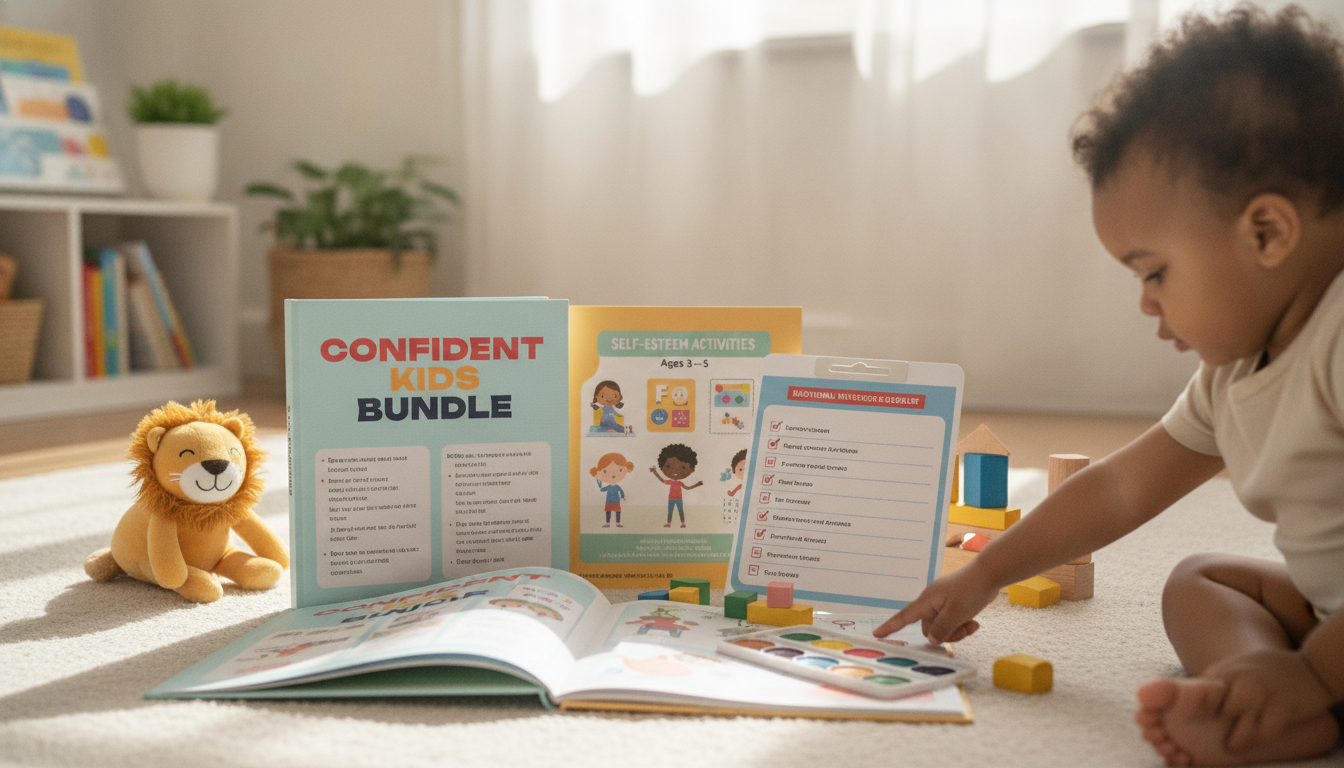
Confident Kids Bundle: Nurturing Emotional Strength for Ages 3–5
Big feelings, new routines, and early friendships can be a lot for preschoolers. A simple, repeatable approach helps children name emotions, practice calming skills, and build the steady confidence that supports learning and relationships. This 3-in-1 bundle pairs a parenting guide with hands-on self-esteem activities (ages 3–5) and an emotional intelligence checklist to make progress easier to notice and maintain.
Why emotional strength matters in the preschool years
Between ages 3–5, children are building the foundation for how they handle stress, frustration, and social bumps. Emotional strength isn’t about never melting down—it’s about learning what feelings are, what to do with them, and how to recover.
- Emotional strength supports attention, problem-solving, and smoother transitions at home and in early learning settings.
- Children ages 3–5 are learning to label feelings, tolerate frustration, and recover after disappointment—skills that improve with practice, not perfection.
- Confidence grows when kids feel understood, get small chances to succeed, and learn what to do when things go wrong.
Helpful guidance for this stage aligns with widely shared developmental recommendations, including positive parenting routines and consistent expectations (see American Academy of Pediatrics/CDC Positive Parenting Tips) and resilience-building through supportive relationships and coping skills (see American Psychological Association guidance on resilience).
What’s included in the Confident Kids Bundle (3-in-1)
The Confident Kids Bundle: Nurturing Emotional Strength (3-in-1 Bundle) is designed for real life: quick scripts during tough moments, simple activities that feel like play, and a checklist that helps caregivers stay consistent without turning growth into a “grade.”
- Parenting guide: practical language and routines to support emotional growth without turning every moment into a lesson.
- Self-esteem activities for ages 3–5: simple exercises that build a child’s sense of capability, belonging, and positive self-talk.
- Emotional intelligence checklist: a way to track skills over time (not to “grade” a child), making it easier to spot what’s improving and what needs more support.
Bundle at a glance
| Component | Purpose | Best time to use | What to look for |
|---|---|---|---|
| Parenting guide | Consistent responses to emotions | Daily routines and tough moments | More cooperation, quicker recovery after upset |
| Self-esteem activities (ages 3–5) | Build confidence through small wins | Playtime, after school, weekends | Trying again, pride in effort, sharing accomplishments |
| Emotional intelligence checklist | Track growth and guide focus | Weekly or biweekly check-in | More emotion words, better calming, kinder repairs after conflict |
How to use the bundle as a weekly routine
Preschoolers learn best through repetition and predictable structure. A weekly rhythm keeps skills “warm” without overwhelming the day.
- Pick one skill theme for the week (for example: “naming feelings,” “calm body,” or “trying again”) and keep it consistent across days.
- Use the parenting guide in the moment: validation first, then a clear boundary, then a choice or next step.
- Schedule 10–15 minutes for one self-esteem activity on most days; repetition matters more than variety.
- Review the checklist once a week to decide what to repeat and what to introduce next.
- Keep materials visible (fridge, playroom shelf) so skills become part of the environment rather than a special event.
A simple pattern many families like is: one short activity after breakfast or after preschool pickup, then one quick “script” at bedtime that previews tomorrow (“If you feel mad, what can your body do?”).
Self-esteem building that fits ages 3–5
Confidence at this age is less about big speeches and more about tiny experiences that add up: “I can try,” “I can help,” and “I can recover.”
- Focus praise on effort and strategies: “You kept trying,” “You used your calm breath,” “You asked for help.”
- Offer jobs kids can master: set napkins, match socks, wipe a spill, or feed a pet with supervision.
- Create “safe challenges” where it’s okay to struggle: puzzles, building, learning to zip a jacket, taking turns in a game.
- Support positive identity with specifics: “You noticed your friend was sad,” “You are learning to wait,” instead of fragile labels.
- Teach repair after conflict: “I’m sorry,” “Can I try again?” plus one small action to make it right.
If a child enjoys helping with a family pet, having kid-friendly routines can make the “job” easier to repeat. Some families pair responsibility practice with practical home items like an Elevated Ceramic Pet Bowl with Solid Wood Stand as part of a predictable feeding routine (always supervised, with clear steps).
Emotional intelligence skills to practice at home
Emotional intelligence for preschoolers looks like naming feelings, finding a calming tool, and reconnecting after a hard moment. Social-emotional development grows through everyday interactions, play, and supportive caregiver responses (see Zero to Three on social-emotional development).
Using the checklist without pressure
Who this bundle is best for
When extra support may be helpful
Optional add-ons for a smoother routine
- 23-Piece Professional Makeup Brush Set (a simple way to streamline a quick getting-ready routine while keeping your attention available for your child)
FAQ
What age is the Confident Kids Bundle designed for?
The self-esteem activities are designed specifically for ages 3–5. The parenting guide and emotional intelligence checklist can be used by caregivers to tailor support across early childhood, especially during preschool transitions.
How long should a daily activity take to be effective?
About 10–15 minutes of consistent practice is enough for most families. Repeating skills during calm moments helps children access those tools more reliably during tough moments.
How can the emotional intelligence checklist be used without making kids feel judged?
Use it as a caregiver planning tool rather than something a child “passes” or “fails.” Focus on small improvements and choose one skill at a time to practice for the week.
















Leave a comment