Kids Arm Sling Fit & Comfort: Adjustable Shoulder Support

Kids Adjustable Arm Sling for Fractures & Shoulder Support: Fit, Comfort, and Everyday Use
A properly fitted arm sling can help keep a child’s arm or shoulder supported while healing, while still allowing comfortable movement for daily activities. The goal is simple: support the injured side without creating new discomfort at the neck, wrist, or fingers. Below are common use cases, what to look for in an adjustable sling, how to dial in sizing, and practical routines for school, sleep, and getting around.
For general injury education, it can help to review guidance from trusted medical organizations like AAOS, KidsHealth, or the NHS. Always follow the specific instructions given by your child’s clinician.
When an arm sling is commonly used for kids
- Short-term support after a fracture, sprain, or soft-tissue injury, when a clinician recommends limiting motion.
- Shoulder support to reduce strain from the weight of the arm and help maintain a comfortable resting position.
- Post-injury comfort during walking, school, or travel to prevent accidental bumps in hallways, crowds, or vehicles.
- Important: follow the clinician’s instructions on whether the sling should be worn full-time or only during activity.
Key features to look for in an adjustable kids sling
- Adjustable strap length for a secure fit across different ages and heights (and for quick re-adjustments during the day).
- Soft, breathable materials to reduce sweating and skin irritation, especially during warm weather or long school days.
- Wide strap design to help distribute pressure and reduce neck discomfort.
- Supportive cradle shape that keeps the wrist and forearm comfortably elevated (as instructed).
- Easy-on, easy-off closures for caregivers, with minimal fiddly parts—helpful when a child is sore or impatient.
Sizing and fit: getting the position right
Fit matters as much as the sling itself. A sling that’s too loose can allow the arm to slide forward; one that’s too tight can irritate the neck or affect circulation. Use these checkpoints and re-check them after your child changes positions.
- Aim for the forearm to rest level or slightly elevated, with the hand higher than the elbow if instructed.
- The elbow should sit deep in the sling so the arm is fully supported and not sliding forward.
- Adjust the strap so the shoulder on the injured side isn’t pulled upward (a common source of neck pain and headaches).
- Check circulation: fingers should stay warm and pink; swelling, tingling, or color change needs prompt attention.
- Recheck fit after sitting, standing, and walking—kids’ posture changes quickly during activity.
Quick fit check for a kids arm sling
| Checkpoint | What “good” looks like | What to adjust or do next |
|---|---|---|
| Elbow position | Elbow is fully supported at the back of the sling | Tighten/shorten sling or reposition arm deeper into the cradle |
| Wrist/hand height | Wrist is supported; hand not drooping below elbow unless instructed | Adjust strap length; add a soft pad under wrist if approved |
| Neck comfort | Strap rests flat and doesn’t dig in | Add strap padding; widen contact area; shorten wear time if advised |
| Finger circulation | Fingers warm, normal color, able to wiggle if allowed | Loosen sling or wrap; elevate; contact a clinician if symptoms persist |
| Skin contact | No rubbing at neck, elbow, or edges | Smooth out folds; use soft clothing layer; check for pressure spots daily |
Comfort and skin-safety tips for daily wear
- Use a thin, soft shirt under the strap to reduce rubbing on the neck and shoulder.
- Inspect skin at least once daily for redness, blisters, or pressure marks—especially behind the neck.
- Keep the sling clean and dry; moisture increases friction and irritation. If it gets sweaty, change the shirt layer and let the sling air out as allowed.
- If swelling is expected, ask a clinician whether periodic elevation or gentle finger motion is appropriate.
- Plan “movement breaks” only if permitted (some fractures require strict immobilization).
School, sleep, and activity: practical routines
Signs the sling fit may be too tight or not supportive enough
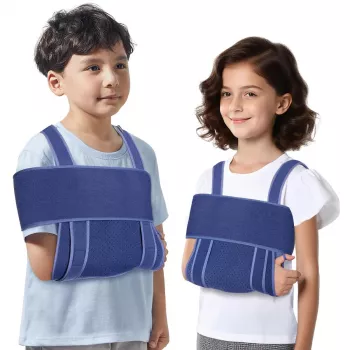
Product spotlight: Kids Adjustable Arm Sling for Fractures & Shoulder Support
Kids Adjustable Arm Sling for Fractures & Shoulder Support is designed to provide supportive positioning for a child’s forearm and shoulder during recovery. The adjustable strap helps dial in fit for comfort across different body sizes, and it’s useful for daily routines like school and travel when extra support is needed. For best results, pair use with clinician guidance on wear schedule, movement limits, and follow-up checks.
More in-stock picks
FAQ
How tight should a kids arm sling be?
It should feel snug enough that the forearm stays supported without sliding, but not so tight that fingers feel numb, tingly, cold, or look pale/blue. Check that fingers stay warm and pink, and contact a clinician promptly if circulation changes don’t improve after loosening and repositioning.
Can a child sleep in an arm sling?
That depends on the injury and the clinician’s instructions. If sleeping in it is allowed, use pillows to support the arm and keep the shoulder relaxed, and monitor for swelling or discomfort during the night.
How do you know if the sling is positioned correctly for a fracture or shoulder injury?
The elbow should sit deep in the sling, the wrist/hand should be supported (often at or slightly above elbow level if instructed), and the strap shouldn’t pull the injured shoulder upward. Finger circulation should remain normal; some injuries require a specific arm angle set by a clinician.














Leave a comment