Rain Cloud Humidifier Guide for Better Sleep & Comfort
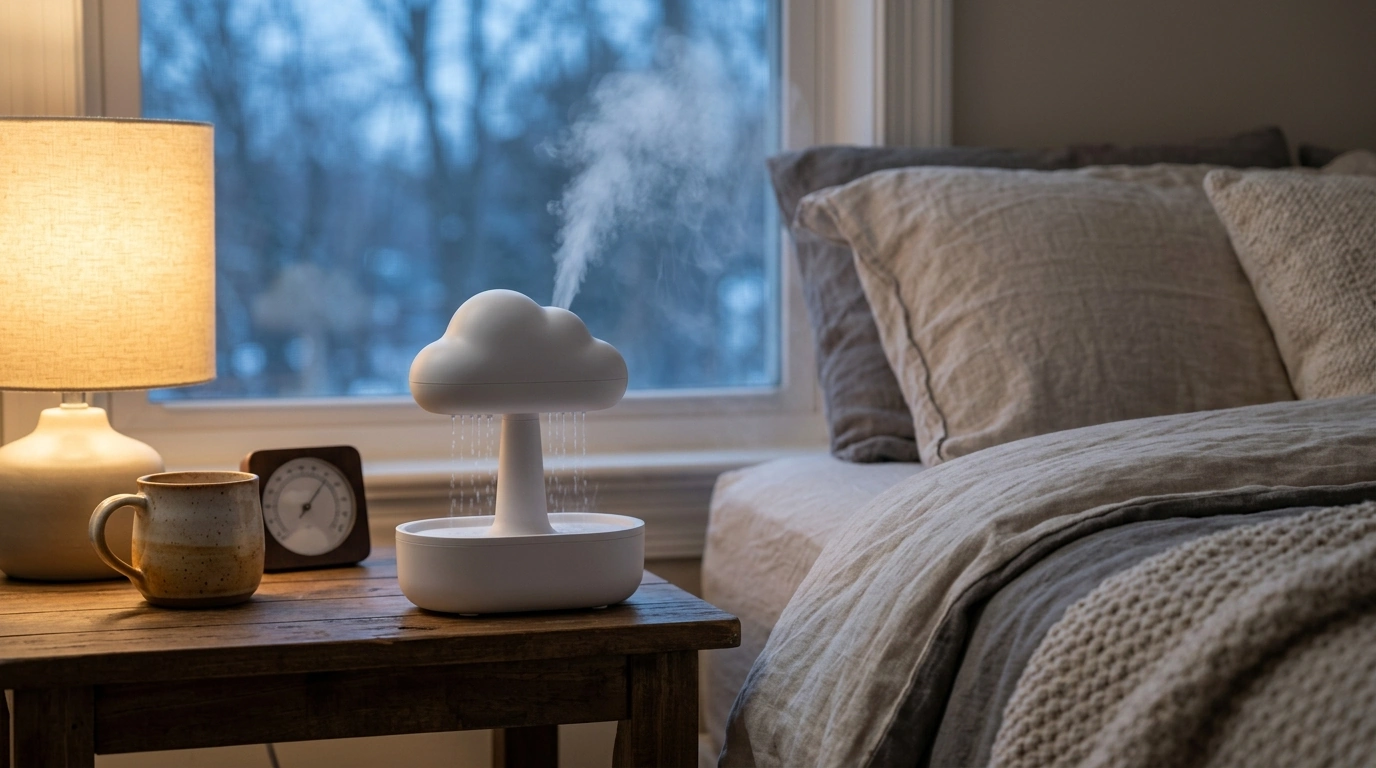
Rain Cloud Humidifier: Calmer Air for Bedrooms, Desks, and Nightstands
Dry indoor air can trigger scratchy throats, restless sleep, and irritated skin—especially during heating season. A rain cloud humidifier adds moisture in a gentle, decorative way, making it a practical choice for small rooms, bedside use, or a work desk where comfort and ambience both matter.
What a rain cloud humidifier does
A rain cloud humidifier is designed to raise indoor moisture levels by releasing a fine, controlled mist. Many models pair the function of a small humidifier with cloud-and-rain styling that looks at home on a nightstand, dresser, or bookshelf.
- Adds water vapor to indoor air to help maintain a more comfortable humidity range.
- Often designed for close-range spaces like bedrooms, nurseries, and home offices.
- Cloud-and-rain styling can double as a mood light or décor accent, depending on the model.
- Best results come from pairing proper placement with consistent cleaning.
Who it’s best for
Small-space humidifiers tend to shine when they’re used consistently in the places people spend the most time—sleeping, working, and winding down. The cloud-style design also makes it easier to keep out in the open, which can help with routine use.
- Light sleepers who want quieter, gentle humidity at night.
- People who wake up with dry nose, throat, or lips during winter or in air-conditioned rooms.
- Desk setups where airflow from HVAC makes the air feel dry over long work sessions.
- Gift buyers looking for a functional item that also looks playful on a shelf or nightstand.
Quick comparison: humidifier styles for small spaces
Not every humidifier works the same way. If you’re choosing for a bedroom, nursery, or office corner, the differences below help narrow the field before you focus on the style you like.
- Ultrasonic options are typically quiet and efficient for bedrooms.
- Evaporative options can be more self-regulating but may require filter changes.
- Warm mist can feel soothing but uses heat and may not suit every household.
- Rain cloud designs are commonly ultrasonic; confirm the specific type and features before purchase.
| Type | How it adds moisture | Upsides | Trade-offs |
|---|---|---|---|
| Ultrasonic (cool mist) | Vibrations turn water into fine mist | Quiet operation; low energy use; good for bedrooms | Needs regular cleaning to avoid buildup; mineral dust possible with hard water |
| Evaporative | Fan pulls air through a damp wick/filter | Naturally limits output; less mineral dust | Filter replacements; fan noise varies |
| Warm mist | Heats water to produce steam | Can feel comforting in cold months | Hot surface/steam considerations; higher energy use |
Features that matter day to day
In a small room, comfort is often about consistency. A unit that’s easy to live with—quiet, predictable, and simple to maintain—tends to get used more often (and that’s what delivers results over time).
- Tank capacity and runtime: longer runtime reduces refills and helps maintain steadier comfort overnight.
- Mist levels and direction: adjustable output helps avoid over-humidifying a small room.
- Auto shutoff: turns off when water runs low for safer unattended use.
- Noise level: quieter units are better for sleep and focused work.
- Light modes: dimmable or optional lighting prevents a bright glow in dark rooms.
- Ease of cleaning: fewer narrow channels and a simpler tank design typically make upkeep easier.
It’s also helpful to keep an eye on humidity levels. Too much humidity can lead to condensation on windows or damp spots on walls; guidance on moisture control and mold prevention is available from the U.S. Environmental Protection Agency and the CDC.
Placement tips for better comfort (and less mess)
Where you set a humidifier affects how evenly the mist spreads—and whether it leaves moisture behind. A few small adjustments can prevent “wet corners” and protect nearby items.
- Set it on a stable, water-resistant surface and consider a small tray or mat beneath it.
- Keep several inches of clearance around the unit so mist can disperse.
- Aim mist away from walls, books, electronics, and upholstered headboards to prevent damp spots.
- Avoid placing directly under shelves where condensation could collect.
- If windows or corners show condensation, reduce output or run it for shorter periods.
Cleaning and water choices
Small humidifiers do best with light, frequent upkeep rather than occasional heavy cleaning. Fresh water and routine rinsing help prevent odors and reduce mineral buildup over time.
A closer look at the Rain Cloud Humidifier
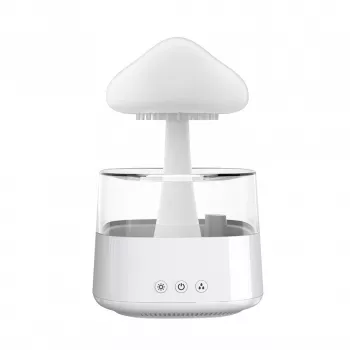
If you’re after a humidifier that’s as display-friendly as it is practical, the Rain Cloud Humidifier is built for compact, everyday placement. It’s designed to add moisture while serving as a decorative accent for small-room setups, making it a natural fit for nightstands, dressers, and desks where a minimal footprint matters.
More in-stock picks
- Dr. Martens Women’s Black Leather Boots
- Diadora Men’s Green & White Leather Sneakers
- Guess Women’s Black Printed Ankle Boots
FAQ
What indoor humidity level is generally considered comfortable?
Many homes aim for roughly 30%–50% relative humidity for comfort. If humidity climbs too high, you may see window condensation or damp areas, so a simple hygrometer can help you monitor levels and adjust output.
Should distilled water be used in a rain cloud humidifier?
Distilled or demineralized water can reduce mineral dust and slow buildup, especially in hard-water areas. Always follow the device’s instructions, since recommendations can vary by model.
How often should a small humidifier be cleaned?
A practical routine is frequent rinsing with fresh water and a regular deep-clean on a set schedule, based on the manufacturer’s directions. Letting water sit for long periods increases the chance of odor and buildup.











Leave a comment