Silicone Nesting Dolls for Babies: Montessori Stacking Play
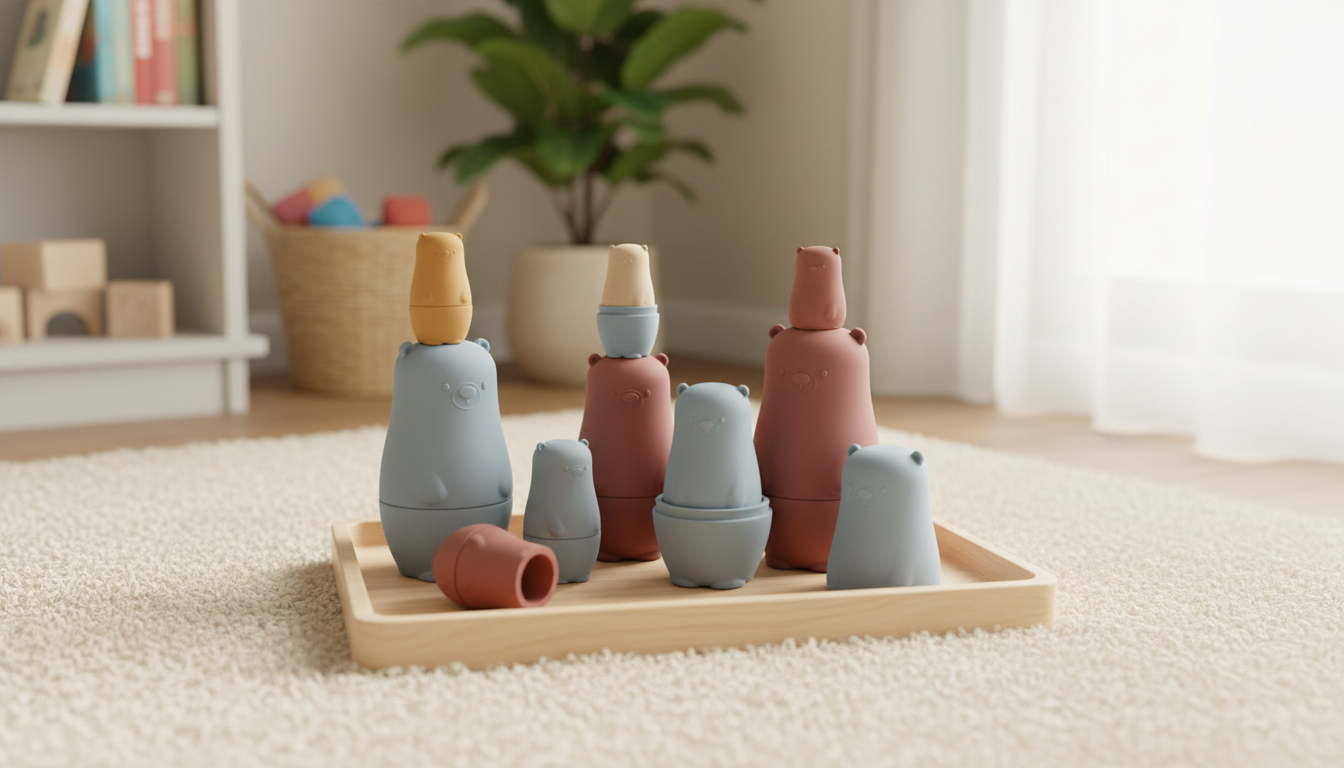
Silicone Baby Nesting Dolls: A Soft, Simple Toy That Grows With Baby
Soft, stackable nesting dolls made from silicone can turn everyday floor time into simple, skill-building play. With open-ended Montessori-style activities—nesting, stacking, sorting, and pretend play—this type of toy supports early motor control, sensory exploration, and problem-solving while remaining gentle on gums and little hands.
What Silicone Nesting Dolls Are and How Babies Use Them
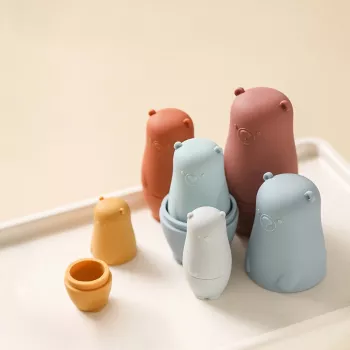
Silicone nesting dolls (or nesting cups shaped like dolls) are a set of graduated pieces that fit inside one another. Babies can explore them in multiple ways: placing smaller pieces into larger ones (nesting), building a vertical tower (stacking), lining pieces up by size, or using them as characters during pretend play.
Play usually shifts as your child develops. Early on, many infants focus on grasping and mouthing a single piece. Next comes “bang-and-drop” play—testing sounds, watching what happens when a piece falls, and practicing controlled release. Later, babies begin purposeful nesting and stacking by aligning edges, rotating pieces, and correcting their angle after a near-miss. Because the design is open-ended, repetition comes naturally, giving babies plenty of practice with coordination and cause-and-effect.
Silicone adds a soft, slightly grippy feel that can be easier to hold than slick plastic. It’s also quieter when pieces tumble onto hard floors—helpful for calmer play in shared spaces.
Skills This Toy Can Support During Montessori-Style Play
Montessori-inspired play doesn’t require complex instructions. Instead, it emphasizes hands-on exploration, minimal adult interference, and inviting materials that reward focus. Nesting and stacking sets fit that approach well because they offer a clear “challenge” (fit, balance, order) without a single right way to play.
- Fine motor skills: grasping, transferring between hands, aligning edges, and releasing with control.
- Hand–eye coordination: guiding a piece into another and adjusting position through trial and error.
- Spatial reasoning: understanding size order, “inside/outside,” and the sequence required to finish a set.
- Early math concepts: big/small comparisons, size ordering, and simple patterning while stacking.
- Language building: naming colors/shapes (if applicable) and using action words like “in,” “out,” “on,” and “under.”
- Sensory exploration: tactile input from silicone texture and supervised mouthing during teething.
Simple Play Ideas by Developmental Stage
| Stage | What Baby Tries | Caregiver Prompt | Skill Focus |
|---|---|---|---|
| Early explorer | Grab, mouth, bang, shake | Offer one piece at a time; narrate actions | Grip strength, sensory input |
| Curious dropper | Drop pieces in/out of a container | Place a larger piece as a “target” to drop into | Cause-and-effect, aim |
| Beginner stacker | Stack 2–3 pieces; knock down | Model one slow stack; let baby copy | Balance, coordination |
| Nesting learner | Fit smaller into larger | Rotate piece slightly and pause to let baby finish | Problem-solving, spatial reasoning |
| Pretend player | Use dolls as characters or “cups” | Name “baby/parent” dolls; act out simple routines | Language, imagination |
Why Silicone Can Be a Practical Material for Infant Toys
Silicone is popular for infant items because it combines flexibility with durability. For nesting pieces that will be squeezed, tossed, and chewed, that matters.
- Soft and flexible: gentle on gums and less jarring when a baby bumps their face during exploration.
- Grip-friendly texture: helps tiny hands hold and reposition pieces with fewer slips.
- Cleaning convenience: often easy to wipe down; always follow the toy’s care directions for washing and drying.
- Built for repetition: nesting and stacking naturally involve lots of drops, pulls, and re-stacking.
- Heat and chemical considerations: stick to manufacturer-recommended cleaning methods; avoid harsh solvents and unnecessary high heat unless explicitly allowed.
Toy Safety Checks for Nesting and Stacking Sets
Any infant toy should be inspected regularly, especially when it’s frequently mouthed. For broader guidance, review toy safety recommendations from the U.S. Consumer Product Safety Commission and the American Academy of Pediatrics.
For a helpful reference on what skills typically emerge when, the CDC developmental milestones pages can support realistic expectations while keeping play pressure-free.
Everyday Montessori-Inspired Activities (No Special Setup)
Product Snapshot: Silicone Baby Nesting Dolls
If you’re looking for a quiet, reusable floor-time activity, Silicone Baby Nesting Dolls – Montessori Stacking & Educational Toy for Infants are designed for nesting, stacking, and open-ended play that can keep pace with early development. They also make a practical gift for baby showers or first birthdays—simple, useful, and easy to revisit day after day.
Quick Details
| Item | Details |
|---|---|
| Product | Silicone Baby Nesting Dolls – Montessori Stacking & Educational Toy for Infants |
| Price | 9.51 USD |
| Availability | In stock |
| Best use | Nesting, stacking, sorting, pretend play |
| Material focus | Silicone (soft, grippy feel) |
Care and Storage Tips to Keep the Set in Good Shape
More In-Stock Finds
FAQ
Are nesting and stacking toys safe for infants who mouth everything?
They can be, as long as you supervise play, choose age-appropriate piece sizes, and regularly check for tears or damage that could create small fragments. Clean the toy as directed and stop using it if the material begins to degrade.
What age is best for nesting dolls and stacking sets?
Many babies start by exploring a single piece through grasping and mouthing, then progress to dropping, stacking, and eventually nesting as coordination improves. The “best” age is less about a strict number and more about matching the activity to your baby’s current skills.
How can Montessori-style play be done with nesting dolls without over-directing?
Present one or a few pieces, model a single slow step, and pause so your baby can attempt the next move independently. Keep prompts minimal, allow repetition, and let your child decide whether to stack, nest, line up, or simply explore the texture.













Leave a comment