Thermal Sight Scope Guide: Specs, Setup, Night Use
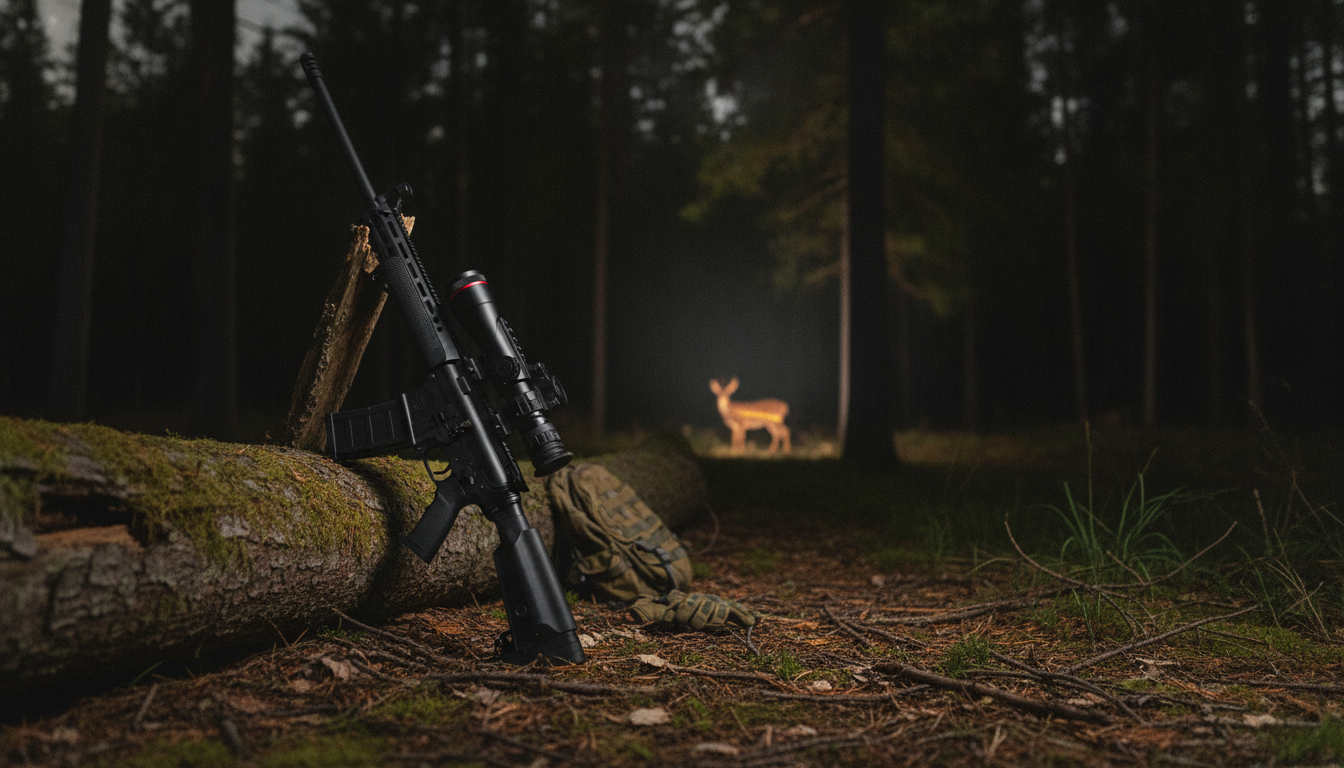
Thermal Imaging Sight Scope: Field-Ready Viewing After Dark
A thermal sight scope helps detect heat signatures in low light, haze, and partial cover—useful for night hunts, property monitoring, and search tasks. Because it reads temperature differences rather than visible light, it can reveal what standard glass and traditional night vision may miss. The sections below break down what thermal does well, what limits to expect, which specs actually matter outdoors, and how to set up and care for the optic so it stays dependable when conditions get ugly. For more guidance, see FLIR Thermal Scopes – SPI Corp.
What a Thermal Sight Scope Does (and Doesn’t Do)
A thermal sight scope detects temperature differences and displays them as a contrast image. Since it doesn’t rely on ambient light, it can still provide a usable picture after dusk, under heavy canopy, or in areas with uneven lighting. For further reading, see Night-vision device – Wikipedia.
Thermal can also help spot targets partially obscured by darkness, light smoke, light fog, or background clutter where standard optics struggle. That said, thermal isn’t “x-ray vision.” It does not see through solid objects like walls, vehicles, or dense structural materials, and thick vegetation can block or scatter heat signatures.
Expect performance swings based on weather and the scene itself. Humidity, rain, and wind can reduce clarity, and warm backgrounds—sun-baked rocks, roofs, or roads—can flatten contrast and make living targets less distinct. For a deeper primer on how thermal imaging works in real environments, see FLIR’s thermal imaging guide.
Key Specifications That Shape Real-World Performance
Spec sheets are only useful when you tie them to how you’ll use the optic. A few specs consistently translate to what you see in the eyepiece.
Sensor resolution affects how much real detail exists before zoom. Higher resolution generally holds up better when you digitally magnify or when you’re trying to distinguish an animal from brush at distance. Pixel pitch is often paired with resolution; smaller pitch can improve detail for a given lens size, but it’s best compared alongside the entire optical system.
NETD (thermal sensitivity) is a major clarity lever on challenging nights. Lower NETD values generally help separate subtle temperature differences—useful in humid conditions or when everything is close to the same temperature. Refresh rate influences how smooth motion looks when scanning and tracking moving targets; also confirm any local restrictions that apply to certain devices or configurations.
Objective lens size can boost detection range and apparent image brightness, but it adds bulk and weight. Finally, display resolution affects perceived sharpness; even a strong sensor can feel “soft” if the display is a bottleneck.
Feature checklist for comparing thermal sight scopes
| Feature | Why it matters | What to look for |
|---|---|---|
| Sensor resolution | Determines base detail before zoom | Match to typical range; avoid over-zooming low-res sensors |
| NETD (sensitivity) | Separates similar temperatures | Lower values help in humid/warm nights |
| Refresh rate | Smoothness on moving targets | Higher feels smoother; check local rules if relevant |
| Objective lens | Affects range and image brightness | Balance distance needs vs weight |
| Reticles & zero profiles | Faster switching between loads/rifles | Multiple profiles, reliable save/recall |
| Battery system | Run time in cold weather | Swappable packs or common cells; USB-C as backup |
| Ruggedness | Holds zero and resists weather | Recoil rating, waterproof rating, shock-tested housing |
Mounting, Zeroing, and Keeping Zero
Start with a quality mount that matches your rail standard. Torque fasteners to the manufacturer’s specs and only use threadlocker if it’s explicitly recommended—overdoing it can cause headaches later when you need to service or re-level the optic.
Thermal scopes reward consistent head position. Confirm eye relief and settle into a repeatable cheek weld; even small changes can create perceived reticle shift and make groups look inconsistent. Zero at a realistic distance for your expected use, and write down conditions (temperature, humidity, and range) so you can interpret any shift later.
If your unit supports multiple profiles, save separate zeros for different loads or platforms and label them clearly. After hard transport, impacts, or major temperature changes, shoot a quick confirmation group before a critical night.
Viewing Modes, Palettes, and Practical Use in the Field
Power, Weather, and Care
Safety and Legal Notes for Night Use
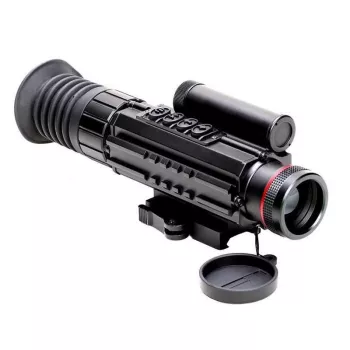
Product Spotlight: Thermal Imaging Night Vision Sight Scope
If you’re looking for a purpose-built optic for after-dark observation and aiming support, the Thermal Imaging Night Vision Sight Scope is a premium-priced option designed for demanding field conditions. It’s well-suited for users prioritizing thermal capability for hunting, security, or field work where visible light is limited.
Optional gear add-ons (in stock)
- Elevated Ceramic Pet Bowl with Solid Wood Stand for a stable water station at camp or in a vehicle staging area.
- Luxury Large Dog Stroller to help transport an older or recovering dog around events, training grounds, or long walks back to the truck.
FAQ
How far can a thermal sight scope detect a target?
Detection range depends on sensor resolution, lens size, target size, temperature contrast, humidity, and terrain. Also separate “detection” (something is there) from “recognition” (what it is) and “identification” (exactly what it is); real-world usable distance is often far less than maximum claims.
Will thermal work in fog or rain?
Thermal often performs better than visible light in light fog or haze, but heavy fog and rain can significantly reduce range and contrast. When weather worsens, adjust contrast/scene modes and expect to shorten your effective viewing and identification distances.
Do thermal sights need to be re-zeroed often?
With a solid mount and consistent torque, thermal sights typically hold zero well. Still, confirm zero after travel, impacts, major temperature swings, switching loads, or any change that could shift the mount or saved profile.














Leave a comment