Dr. Martens Sizing: When to Size Up vs Down
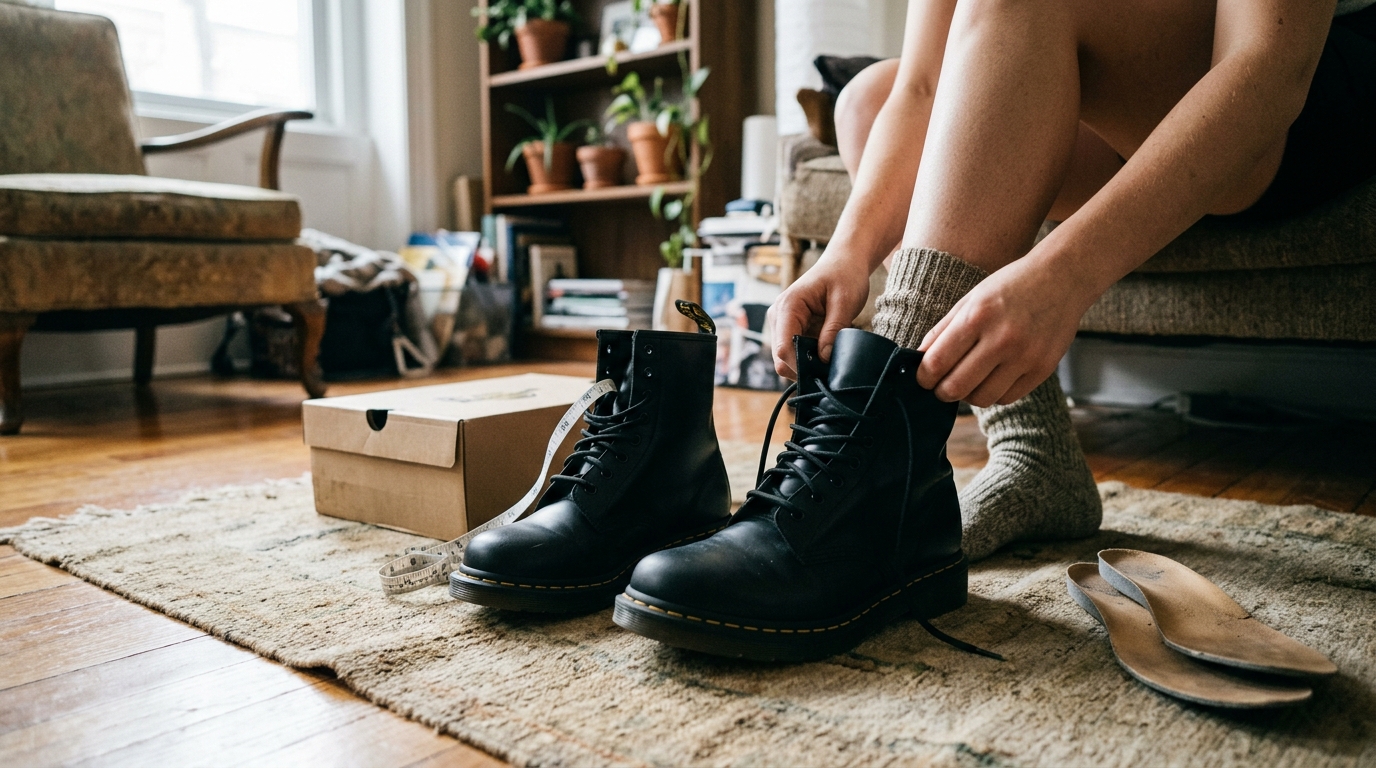
Should I size up or down for Dr Marten boots?
For most people, Dr. Martens boots run true to size, so starting with your usual US size is the safest move. The bigger decision is whether you’re between sizes, plan to wear thick socks, or have a wider foot—those are the situations where sizing up can make break-in much more comfortable.
When to size down
Size down if you’re between sizes and your feet are narrow to average width. Dr. Martens leather can relax and mold with wear, so a boot that feels slightly snug (especially across the top of the foot) often becomes comfortable after a break-in period. If you have noticeable heel slip in your normal size, going down can help prevent blisters and that “clunky” feeling that comes from extra internal space.
When to size up
Size up if you’re between sizes and you have a wider foot, high instep, or you expect to wear thicker socks in colder months. A little extra room can reduce pressure points at the vamp and toe box during the first few wears. Sizing up can also be smart if you plan to add an insole for more cushioning or arch support—insoles take up space and can make a true-to-size fit feel tight.
Quick fit check (what “right” feels like)
Your toes should have a bit of wiggle room and not touch the front when standing. The heel should feel secure with minimal lift while walking. Snugness around the upper is normal early on, but sharp pinching or numbness usually means the boot is too small.
For more detail on fit, styling, and long-term care, visit the full guide: women’s black Dr. Martens boots fit, style, and care.
FAQ
How do I break in Dr Martens faster without ruining them?
Wear them in short sessions with thicker socks, and use a leather conditioner on stiff areas to soften the material gradually. Focus on reducing friction at the heel and across the top of the foot, and avoid soaking or overheating the leather.













Leave a comment