71-Inch Wooden Dog Crate Console: 3 Rooms + Drawers
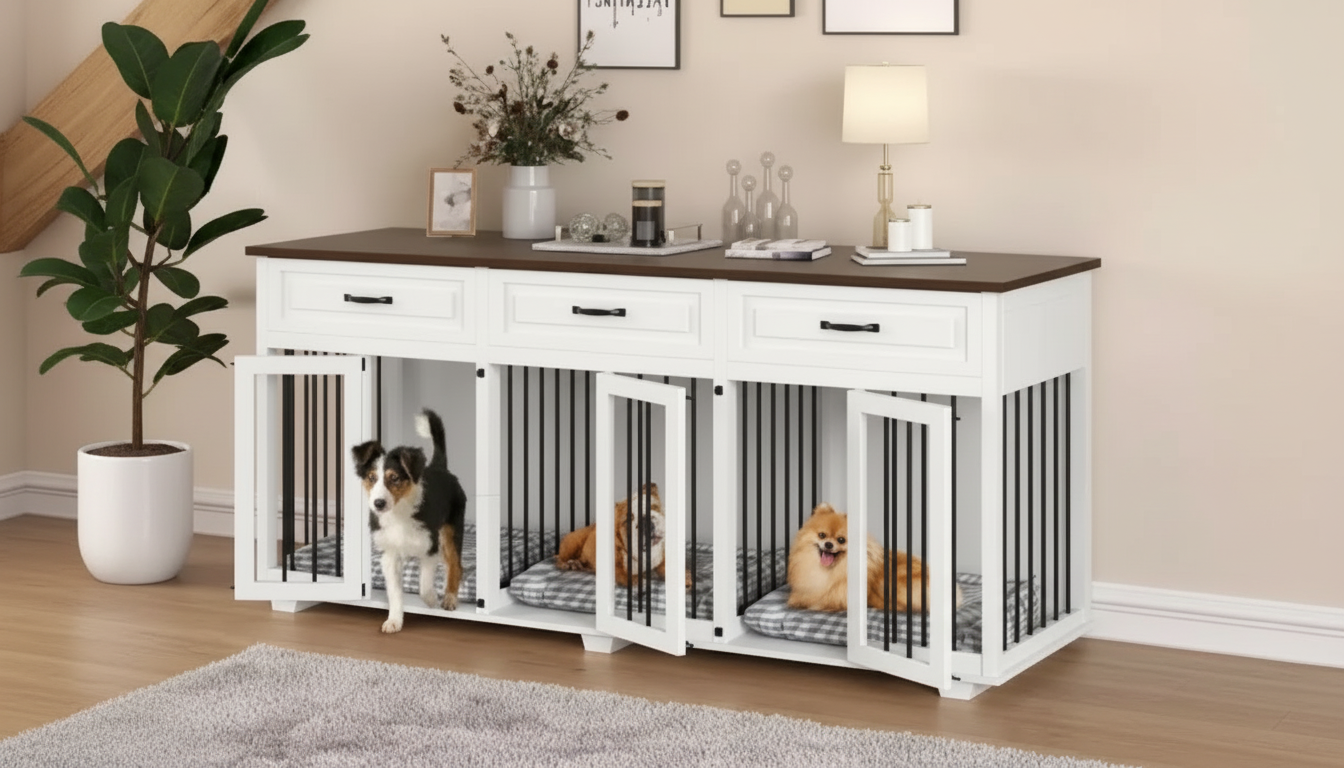
71″ Wooden Dog Crate with Drawers and 3 Rooms: Dog Space Meets Home Storage
A dog crate that doubles as furniture can streamline everyday life while keeping common areas looking pulled together. The 71-inch wooden dog crate with three separate rooms and built-in drawers is designed for households that need structured separation (for multiple dogs or for different routines with one dog) plus a convenient place to store essentials like leashes, treats, grooming tools, and spare liners.
Instead of relying on a standalone wire kennel and a separate storage bin, this all-in-one approach keeps pet “gear” close to where it’s used and turns the crate footprint into a functional surface in a living room, hallway, or larger open-plan space.
What Makes This Crate-Furniture Hybrid Different
- Three-room layout: Separate compartments help manage feeding time, rest breaks, and gradual introductions—useful for reducing tension and resource guarding triggers in multi-dog homes.
- Integrated drawers: Built-in storage keeps daily items close to the crate so they don’t migrate across entryways and living spaces.
- Furniture-style presence: A wood crate designed like home furniture can blend more naturally with decor than a traditional metal kennel.
- 71-inch span: The long profile can act like a console-style surface while providing dedicated dog spaces underneath.
At-a-Glance Details
This unit is best viewed as a multi-compartment indoor dog house with storage—ideal when containment and organization need to happen in the same spot.
| Feature | What to Expect |
|---|---|
| Product name | 71″ Wooden Dog Crate with Drawers and 3 Rooms – Stylish Dog House Furniture |
| Overall size | 71-inch overall length (as titled) |
| Rooms | 3 separate rooms/compartments |
| Storage | Built-in drawers |
| Availability | In stock |
| Price | $586.01 USD |
Who It Fits Best (and When to Choose Something Else)
- Multi-pet households: Separate spaces can help with calm downtime, structured feeding, and smoother transitions when guests arrive.
- Homes that need clutter control: The drawers can hold leashes, harnesses, waste bags, wipes, nail trimmers, and training treats so you’re not constantly hunting for supplies.
- Routine-based management: Useful during deliveries, cleaning sessions, or when baby gates are open and dogs need short-term structure.
- When to skip: Consider other options if you need airline travel compliance or heavy-duty impact resistance for a committed escape artist. For crate training fundamentals and best practices, refer to the American Kennel Club’s crate training tips.
Planning the Setup: Room Placement, Comfort, and Airflow
Choose a calm location
Place the crate in a low-traffic, low-draft area where dogs can settle without constant foot traffic. A quieter corner often supports faster acclimation and fewer startle reactions.
Keep airflow and visibility clear
Avoid draping blankets or decor across the front where ventilation could be restricted. Dogs tend to relax better when the space feels open and predictable, especially during early training.
Reduce household noise around the unit
If you plan to use the top surface for everyday items, consider felt pads under decor to reduce vibration and “clatter” when something shifts. Small changes like this can make the crate area feel calmer, particularly for sound-sensitive dogs.
Multi-dog consistency
Assign consistent rooms so each dog has a predictable spot for rest breaks. That predictability can lower friction during high-energy moments such as pre-walk excitement or meal prep. For broader behavior and dog-care guidance, the ASPCA dog care resources are a helpful reference point.
Using the Drawers for a Cleaner Routine
Care and Maintenance for Wood Crate Furniture
Safety Notes for Crate Training and Multi-Dog Use
- Go gradual: Build positive associations with short sessions and high-value rewards. The goal is a calm “safe zone,” not a forced timeout.
- Use appropriate space per dog: Each dog should be able to stand, turn, and lie down comfortably in its assigned compartment.
- Reduce snag hazards: Remove collars with dangling tags if there’s any chance of catching; consider breakaway options when appropriate.
- Manage feeding: Feed separately if needed and supervise early sessions to reduce tension between dogs.
- Balance with enrichment: Compartments are for rest and short-term management, not a replacement for exercise and mental stimulation. For general guidance on choosing and managing pets responsibly, see the AVMA pet owner resources.
Product Options to Consider (In Stock)
- 71″ Wooden Dog Crate with Drawers and 3 Rooms – Stylish Dog House Furniture — a single furniture-style unit that combines containment, separation, and drawer storage.
- Dr. Martens Women’s Black Leather Boots — a sturdy footwear option for daily dog walks and errands, especially in wet or messy conditions.
- Diadora Men’s Green & White Leather Sneakers — a casual sneaker pick for regular neighborhood walks and day-to-day outings.
FAQ
Can two or three dogs share this crate setup?
Yes—its three-room design is meant to provide separate spaces, which is often safer and calmer than having dogs share one enclosure. Each dog should have its own compartment that allows comfortable movement, and early use should include separate feeding and consistent room assignments to reduce conflict.
Is a wooden crate safe for crate training?
It can be safe when introduced gradually with positive reinforcement and when chewing is supervised, especially during the first weeks. Keep ventilation paths clear, remove snag-prone collars or dangling tags, and use easy-to-clean liners if accidents are possible during training.
How should the drawers be organized for everyday use?
A simple system works best: one drawer for walking gear, one for grooming/health items, and one for training tools and treats. Use sealed containers for treats and add dividers so smaller items don’t shift when opening and closing drawers.












Leave a comment