Storage Hacks to Cut Visual Clutter + Printable Checklist
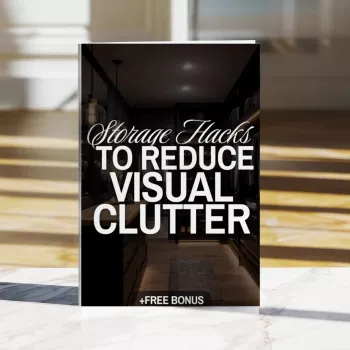
Storage Hacks to Reduce Visual Clutter: A Practical Checklist for a Calmer Home
Visual clutter isn’t just “too much stuff”—it’s too much visible stuff competing for attention. The fastest wins come from creating clean sightlines: fewer items left out, fewer mismatched containers, and more zones that stay closed, labeled, and easy to reset. Use the steps below as a quick decluttering guide, then keep momentum with a printable checklist that turns organizing into a repeatable routine.
A calmer environment can support healthier daily rhythms and reduce overwhelm—especially when your home is also your workspace, gym, and downtime zone. For broader well-being basics, the National Institute of Mental Health shares practical mental health care guidance, and the CDC offers straightforward tips for keeping your home clean and disinfected.
Start With Sightlines: The 10-Minute Visual Clutter Scan
- Stand in each room’s doorway and note the first three things your eyes land on; those are the priority clutter magnets.
- Clear horizontal surfaces first: entry console, kitchen counters, coffee table, nightstands, bathroom vanity.
- Group loose items into one temporary “sort bin” per room to avoid creating new piles while deciding.
- Aim for “two-thirds calm”: if 2 of 3 main surfaces look clear, the room feels noticeably lighter.
- Finish with a quick reset rule: nothing new stays out unless it has a defined home.
Keep the first pass ruthlessly simple: you’re not “organizing” yet—you’re restoring clean visual lines so your space instantly feels easier to live in.
Minimalist Storage Rules That Reduce Visual Noise
- Contain by category, not by room: create one container for each repeat offender (mail, cables, pet items, chargers).
- Prefer closed storage when possible: baskets with lids, boxes, drawers, cabinets, and ottomans hide micro-clutter.
- Standardize containers: same color and shape reads as “organized” even when full.
- Use “one-touch” storage: if putting it away takes more than one step, it will end up on a surface.
- Keep labels simple and consistent; place them on the front lower corner so they’re readable without dominating the space.
- Adopt the “clear the floor” guideline: if the floor is visible, the whole room looks calmer.
High-Impact Storage Swaps
| Clutter Magnet | Better Storage Choice | Why It Works | Fast Reset Tip |
|---|---|---|---|
| Open countertop items | Tray + cabinet bin | Groups essentials and hides extras | Only keep daily-use items on the tray |
| Entryway pile-up | Lidded basket + wall hooks | Stops spread and creates a landing zone | Empty basket weekly; keep hooks to 1 item each |
| Visible cords and chargers | Cable box + labeled pouch | Removes tangles from sightlines | One charging station per household zone |
| Bathroom bottles | Under-sink caddy + drawer dividers | Prevents product creep on vanity | Refill/replace only when one item is finished |
| Kids’ small toys | Photo-labeled bins with lids | Speeds cleanup and hides colorful clutter | Rotate 2–3 bins; store the rest out of reach |
| Paper stacks | Vertical file + “action folder” | Keeps paper upright and contained | Process the action folder on a set day |
Room-by-Room Storage Hacks (Entry, Kitchen, Living, Bedroom, Bath)
Entry
- Create a single drop zone (keys/wallet/sunglasses) plus one basket for outgoing items; avoid multiple surfaces.
- If shoes are the main mess-maker, set a “shoe cap” by the door: only the pairs in current rotation live there.
If your daily footwear tends to drift into walkways, tightening your rotation can help. A streamlined pair like Diadora Men’s Green & White Leather Sneakers can cover everyday errands without needing multiple pairs piled near the entry.
Kitchen
- Dedicate one drawer or bin for “daily tools” and move duplicates to higher or harder-to-reach storage.
- Keep counters visually quiet by storing small appliances unless they’re used daily.
Living Room
- Corral remotes, coasters, and chargers into a closed box; keep blankets in one uniform basket.
- Limit décor to a few intentional items; give everything else a drawer, cabinet, or lidded bin.
Bedroom
- Clear the nightstand to essentials only; use a small drawer organizer to prevent item sprawl.
- Use one hamper (or two, max) and keep it out of the main sightline if possible.
Reducing “maybe” clothing decisions also reduces bedroom clutter. If you’re curating a smaller, reliable shoe lineup, consider sticking to versatile staples such as Dr. Martens Women’s Black Leather Boots or Guess Women’s Black Printed Ankle Boots—then store off-season pairs out of view.
Bathroom
Decluttering Decisions That Stick (Without Overthinking)
The Weekly Reset Routine: Keep Surfaces Clear in 15 Minutes
Printable Checklist: Turn These Storage Hacks Into a Repeatable System
- Use a checklist to avoid decision fatigue: quick scan, clear surfaces, contain categories, label, and set a reset cadence.
- Print one copy for each problem area (entry, kitchen, closet, bathroom) and keep it near the supplies used most.
- Track small wins: one surface cleared, one drawer contained, one bin labeled—momentum beats marathon sessions.
- For a ready-made option, use the Storage Hacks to Reduce Visual Clutter printable checklist (digital download) as a step-by-step companion.
- Pair the checklist with a small “organizing kit”: labels, marker, measuring tape, a donation bag, and one empty bin.
FAQ
What’s the fastest way to reduce visual clutter in one day?
Prioritize sightlines: clear counters and tables first, then hide small items in closed containers. Finish by setting one drop zone per room so new piles don’t reappear.
Should storage containers be clear or opaque for a minimalist look?
Opaque or uniform containers reduce visual noise, especially on open shelving. Clear containers work best inside cabinets or closets where quick identification matters more than aesthetics.
How can a checklist help with decluttering when motivation is low?
A checklist replaces big decisions with small steps (scan, sort, contain, label, reset) and makes progress measurable in short sessions. When you only have a few minutes, it helps you do the next right task instead of stalling.












Leave a comment