Habitats Tree Scratchers Tower: Setup, Care & Tips
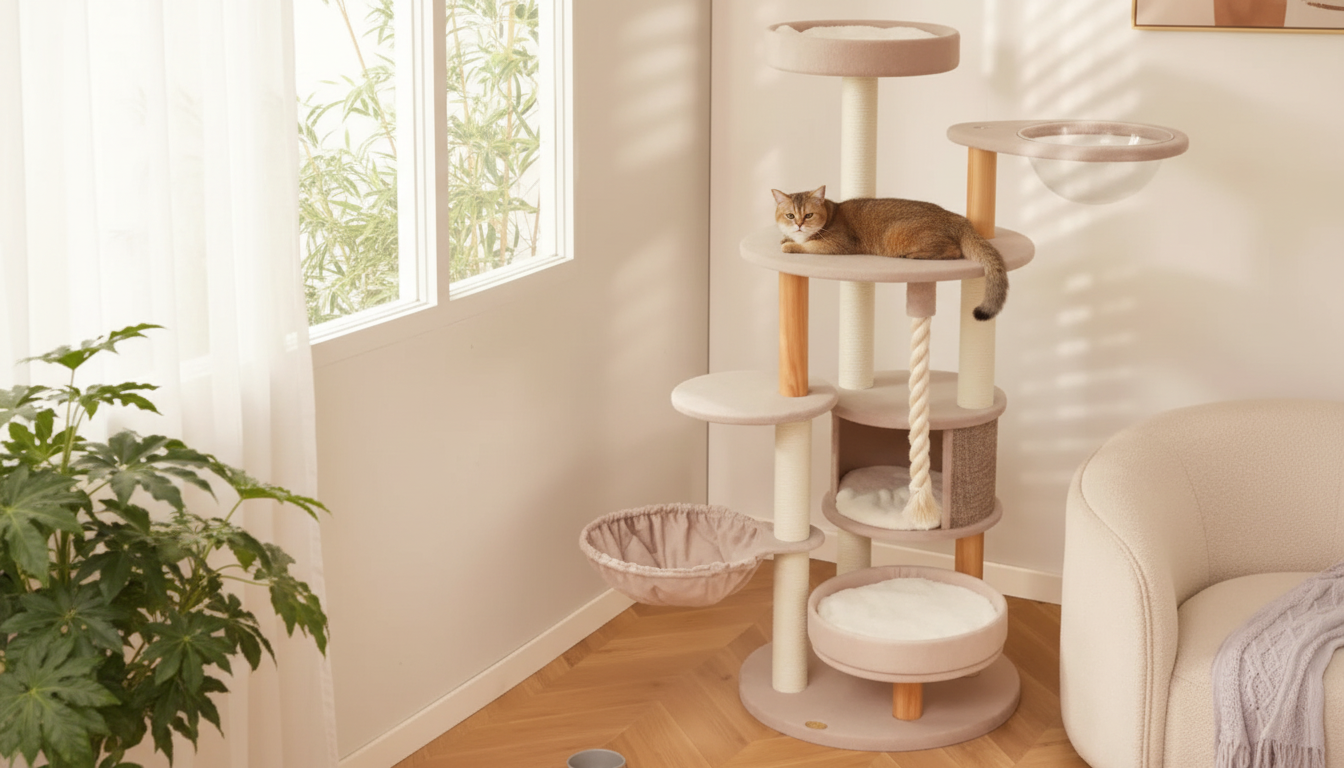
Habitats Tree Scratchers Tower: A Cat Climbing and Scratching Habitat
A tall cat tower can turn unused vertical space into a daily routine of climbing, scratching, perching, and resting. The Habitats Tree Scratchers Tower is designed to give cats an elevated hangout while helping redirect scratching away from furniture. For indoor cats especially, a tree-style tower can become the “home base” where energy gets burned off, nails get conditioned, and naps happen at a comfortable height.
What a tree-style scratcher tower adds to a home
Cats don’t just live on the floor—they map their territory in layers. A tower adds a vertical route that can change the feel of a room for a cat, even if your square footage stays the same.
- Creates vertical territory, which can help cats feel more secure and reduce crowding in multi-pet spaces.
- Encourages natural behaviors: climbing, surveying, stretching, and scratching.
- Offers a dedicated outlet for scratching that can protect rugs, couches, and door frames.
- Supports daily activity bursts that can help indoor cats stay engaged and less likely to invent their own “projects.”
Scratching is a normal, healthy behavior. It helps cats maintain their claws, stretch through their shoulders and back, and communicate through both visible marks and scent. If you’re trying to protect furniture without resorting to harsh measures, it’s worth reviewing guidance from the International Cat Care on scratching behavior and the AVMA policy statement on declawing.
Habitats Tree Scratchers Tower overview
The Habitats Tree Scratchers Tower is built for cats that want multiple activities in one spot—scratching, climbing, and lounging—without needing several separate pieces of cat furniture scattered around the house.
- Product name: Habitats Tree Scratchers Tower
- Availability: In stock
- Best for: Cats that like to climb, perch, and scratch in one place
- Placement ideas: Near a window for bird-watching, in a main living area for social lounging, or beside a sofa to redirect scratching
- Care mindset: Regular lint removal and checking fasteners helps keep towers stable and inviting
Quick details
| Item | Details |
|---|---|
| Product | Habitats Tree Scratchers Tower |
| Price | 1611.99 USD |
| Availability | In stock |
| Product page | https://unitare.com/habitats-tree-scratchers-tower/ |
How to set up for stability and daily use
Even a great tower won’t get used much if it wobbles, blocks traffic, or feels “wrong” to approach. A few setup choices can make the difference between occasional use and a daily ritual.
- Choose a flat, non-slippery surface; add a rug pad underneath if the floor is slick.
- Position the base so the tower is not crowded by swinging doors or tight walkways.
- If placing near a window, avoid direct contact with blinds cords and ensure the tower cannot be pulled forward by a jumping cat.
- Introduce the tower with familiar scents (a blanket or a small amount of catnip on scratching areas, if appropriate).
- Reinforce early use with treats and play (wand toys guided toward the tower can encourage climbing).
Placement checklist
| Location | Why it works | Watch-outs |
|---|---|---|
| Near a window | Perching and visual enrichment | Secure cords; keep away from unstable blinds |
| Beside the couch | Redirects scratching to the tower | Leave room for jumping/landing |
| Quiet corner | Great for napping and decompression | Avoid isolating it too far from daily activity if the cat prefers company |
Scratching behavior: making the tower the favorite spot
Most “my cat ignores the scratcher” problems are really “the scratcher is in the wrong place or doesn’t feel rewarding yet.” Stack the odds in your favor by building a clear routine around the tower.
- Match the scratching angle: many cats like vertical scratching after waking, while others prefer a slightly angled surface.
- Reward the behavior that matters: treat and praise immediately after scratching the tower.
- Make furniture less appealing temporarily: use double-sided tape or protective covers while the tower becomes the habit.
- Keep the scratching zones clean: heavy fur buildup can make surfaces less satisfying.
- Rotate toys and add occasional novelty: a new dangling toy or a different perch blanket can sustain interest.
Comfort, safety, and multi-cat harmony
To keep mealtimes comfortable near the tower without putting bowls under falling fur and litter-tracking paws, consider setting dishes a short distance away. A raised option like the Elevated Ceramic Pet Bowl with Solid Wood Stand can help keep feeding tidy and at a consistent height, while the tower stays dedicated to play and rest.
Care and maintenance routine
Simple upkeep schedule
| Task | How often | Tip |
|---|---|---|
| Vacuum platforms | Weekly | Use a crevice tool along edges where fur collects |
| Tighten fasteners | Monthly | Do a quick wobble-check after tightening |
| Inspect scratching areas | Monthly | Replace/refresh if the surface is flattened or unraveling |
FAQ
How tall should a scratcher tower be for an adult cat?
A practical target is tall enough for a full-body stretch while scratching and a perch that feels safely elevated—often in the 24–60 inch range depending on your space and your cat’s confidence. Base width and overall stability matter as much as height, because a shaky tower can make cats avoid using the upper levels.
How can a cat be encouraged to use a new scratcher tower instead of the couch?
Place the tower right next to the current scratching spot, reward tower scratching immediately with treats or play, and add a small amount of catnip if your cat responds well to it. Temporarily protect the couch (covers or double-sided tape) while the tower becomes the easiest, most satisfying option.
Is a tree-style tower suitable for older cats?
Yes, if access is made joint-friendly: provide lower steps, add a stable ottoman nearby, and prioritize traction on approach paths. Keep the tower on a non-slip surface and do frequent stability checks so an older cat doesn’t get startled by movement.













Leave a comment