Modular Outdoor Cat Enclosure With Platforms for Multi-Cat Fun
Fresh Air Without the Free-Roam Risks
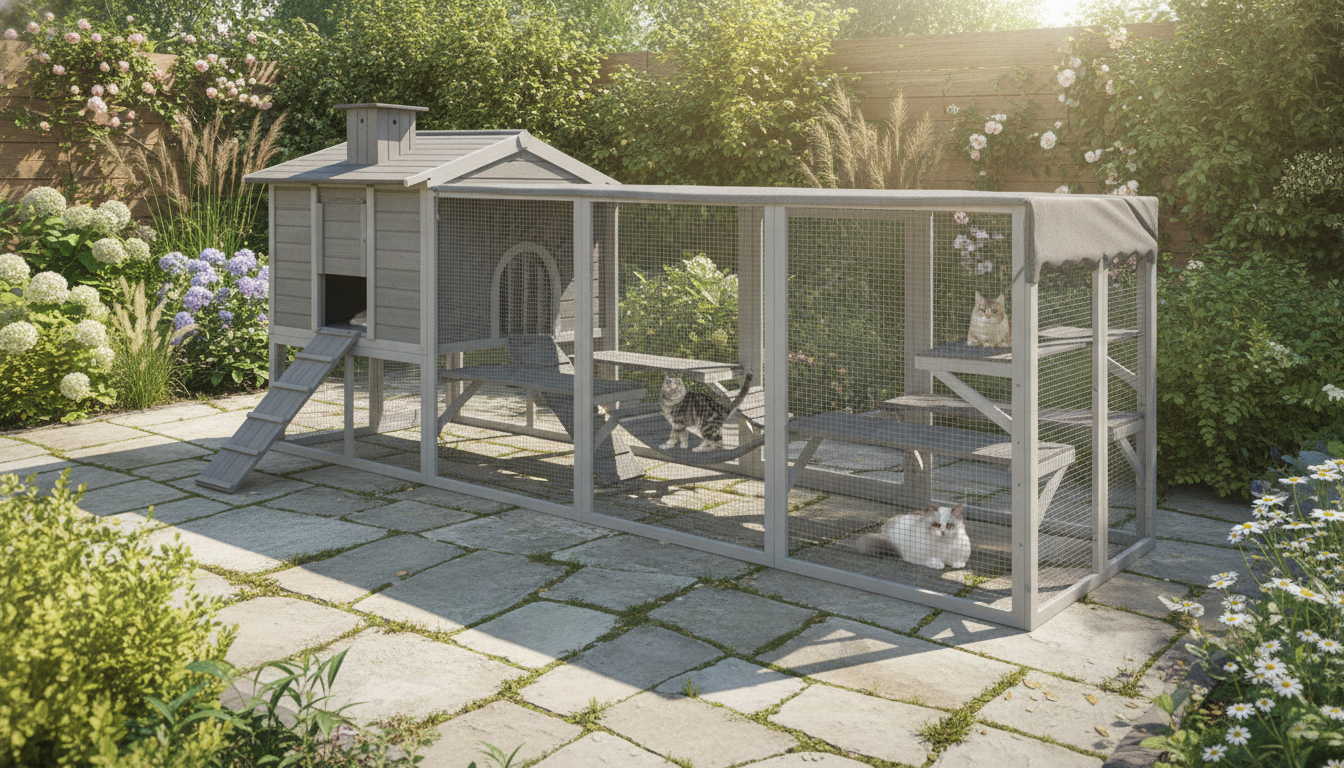
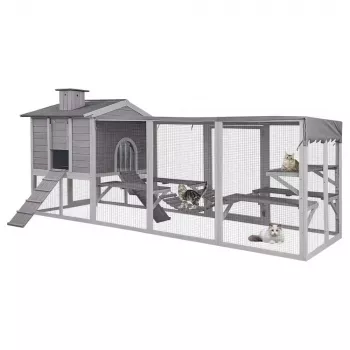
An outdoor enclosure can give cats sunshine, breezes, and a front-row seat to backyard activity while keeping them protected from traffic, predators, and other neighborhood hazards. This style of enclosure pairs elevated platforms with a reconfigurable “deformation” layout so multiple cats can climb, lounge, and move through the space with less crowding and more variety. The result is a safer way to offer outdoor enrichment for curious cats—especially in multi-cat households where a single flat run can feel cramped fast.
What This Enclosure Adds to Daily Cat Life
For many homes, the biggest benefit is consistency: cats get a predictable outdoor routine without the stress of door-dashing, harness battles, or unsafe roaming. A controlled outdoor zone supports sunbathing, bird-watching, and scent enrichment while limiting risk. Platforms also introduce vertical territory, giving cats more ways to “share” the space without constantly crossing paths.
A reconfigurable layout helps keep the experience from getting stale. Instead of the same straight line every day, you can adjust routes and resting spots so your cats continue to explore, pause, and re-engage—especially helpful for indoor-only cats learning to enjoy outdoor time at their own pace.
| Option | Freedom to Explore | Safety Control | Best For |
|---|---|---|---|
| Harness & leash | Medium | High (with handling) | Single-cat outings and training |
| Portable playpen | Low–Medium | Medium | Short sessions and travel |
| Outdoor enclosure/run | Medium–High | High | Multi-cat households and daily use |
| Unrestricted roaming | High | Low | Not recommended in high-risk areas |
Platforms and Vertical Space: Why It Matters for Multiple Cats
Cats naturally sort space by height. One cat may prefer to observe from above while another investigates at ground level—so when you add platforms, you add options. That vertical separation can reduce social pressure in multi-cat groups, because cats don’t have to compete for a single “best seat” or constantly pass each other in narrow areas.
Platforms can also create lower-impact exercise. Rather than only sprinting on flat ground, cats can step, climb, and hop between levels in short bursts, which is ideal for many adult cats who want movement without marathon running. Just as importantly, elevated resting areas can act like “pause buttons,” letting cats calm down mid-session instead of escalating into rough play.
Simple ways to use platforms during play
- Lookout perch: Position a higher platform to face the yard so a confident cat can watch activity while another explores below.
- Treat trail: Scatter a few small treats across different levels to encourage foraging and gentle movement.
- Toy path changes: Move a wand toy route between levels to vary the chase without forcing cats into the same lane.
- Rest zoning: Add a washable pad or blanket to one platform so there’s always a calm “time-out” spot.
Deformation (Reconfigurable) Design: Flexible Layout for Changing Needs
Backyards and patios rarely match a perfect rectangle, and fixed enclosures can waste space or block walkways. A reconfigurable design can be arranged to fit patios, lawns, decks, or side yards where a rigid shape doesn’t work. It also makes multi-cat traffic flow easier to manage: you can create more than one path to platforms and resting areas so one cat can pass through without being intercepted.
Route changes also keep cats curious. Rotating the layout—just a little—can renew interest for cats who otherwise “solve” the enclosure in a day or two. Seasonally, the ability to shift sections can help you balance sun and shade while still maintaining airflow and visibility.
Safety and Comfort Checklist
Even a well-built enclosure benefits from a quick routine. Place it on level ground, avoid low areas where water collects, and aim for partial shade so cats can thermoregulate. Outdoor time should be limited in extreme heat or cold, and fresh water should always be available. For broader guidance on outdoor safety, see the American Veterinary Medical Association (AVMA) advice on cats and the outdoors and the ASPCA cat safety resources.
- Escape prevention: Check doors and latches before every session; keep entry calm and consistent to reduce darting.
- Paw and claw safety: Inspect mesh/panels for sharp edges, gaps, or bent areas; remove loose ties or protrusions.
- Parasite protection: Use veterinarian-recommended flea/tick prevention for cats who spend time outside.
- Supervision: Periodic checks help prevent bullying, stress, or accidental tangles with toys.
| Check | What to Look For | When to Do It |
|---|---|---|
| Door and latch | Secure closure, no wobble | Every session |
| Panels/mesh | No tears, bending, or gaps | Weekly; after storms |
| Platforms | Stable, level, no flexing | Weekly |
| Ground contact | No sinking or uneven base | Seasonally; after heavy rain |
| Enrichment items | No strings/loops left unattended | Every session |
Setup and Use Tips for Multi-Cat Harmony
When an Outdoor Enclosure Is a Particularly Good Fit
Shop Related Products
- Outdoor Cat Enclosure with Platforms & Deformation Design for Multi-Cat Play — $528.17
- Diadora Men’s Green & White Leather Sneakers — $96.51
- Dr. Martens Women’s Black Leather Boots — $141.51
FAQ
Can multiple cats use the enclosure at the same time?
Yes, but introduce shared use gradually. Provide more than one platform and more than one resting area so cats can spread out, and supervise early sessions to watch for blocking, chasing, or guarding.
Does an outdoor enclosure replace supervision?
No. It reduces risk but doesn’t eliminate it, so periodic checks are still recommended for weather shifts, stress between cats, and to confirm doors, latches, and panels remain secure.
Where should it be placed for the best comfort?
Choose level ground with partial shade and good airflow. Avoid spots that flood, overheat in direct afternoon sun, or sit close to hazards like grills, sharp tools, or areas where debris can blow into the enclosure.












Leave a comment