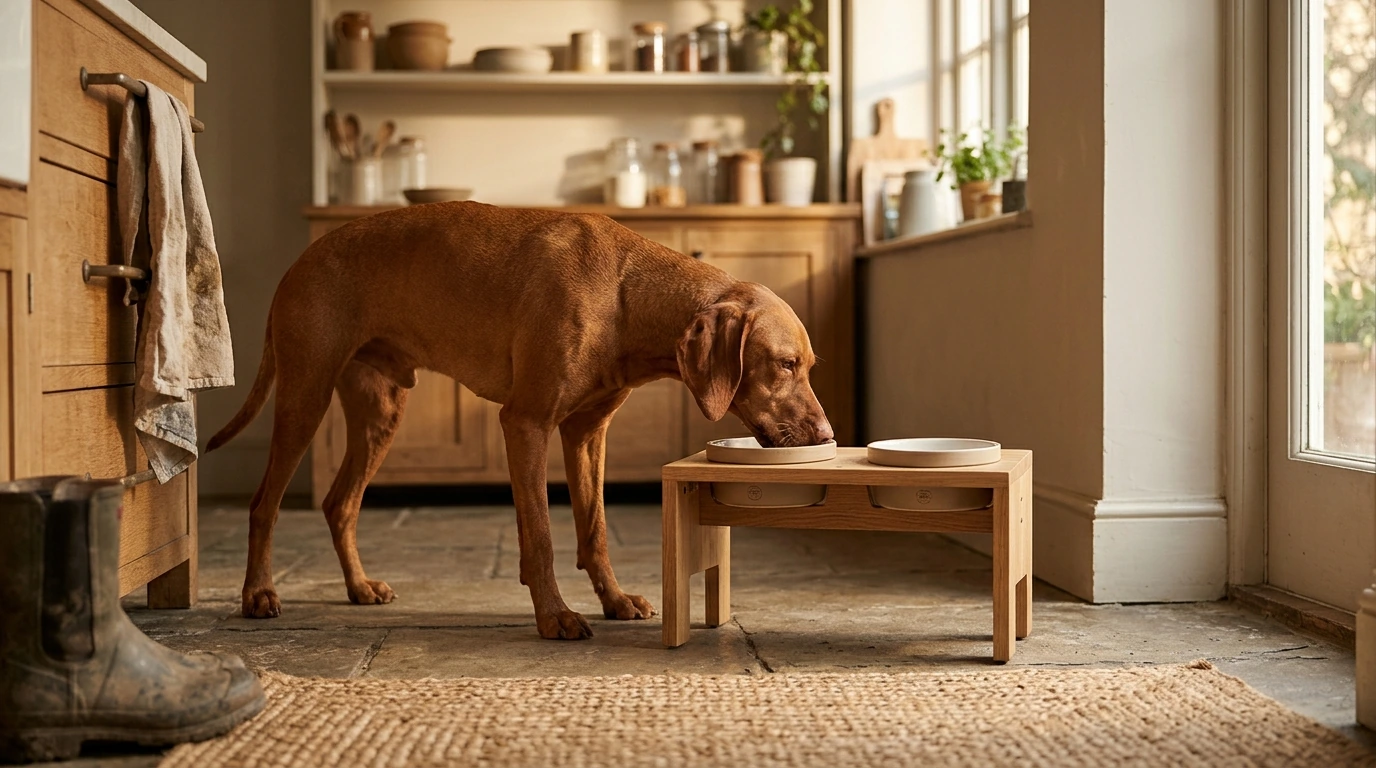
Not necessarily. Some dogs eat comfortably from a bowl on the floor, while others benefit from having their food or water raised. An elevated bowl can make meals easier to reach for a dog with limited mobility, but it is not automatically healthier for every dog.
The best choice is the one that lets your dog eat comfortably and safely. If your dog has arthritis, neck discomfort, or another medical condition, ask your veterinarian whether a raised feeding setup is appropriate.
A raised bowl may reduce the need to bend down, which can be useful for some older dogs or dogs with joint or mobility difficulties. It may also give a taller dog a more convenient position at mealtime. Watch how your dog approaches the bowl: a relaxed stance and easy access to the food are more useful signs than height alone.
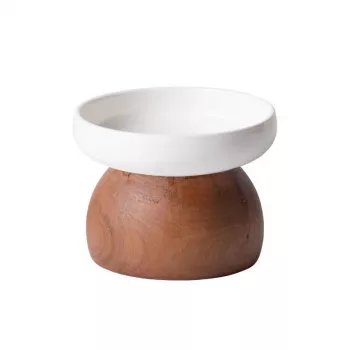
Some stands also help keep bowls in place. A stable setup can be especially useful if your dog tends to push a dish across the floor. For more on choosing materials and a stand, see our guide to elevated ceramic pet bowls with solid wood stands.
No single feeding position suits every dog. Elevated feeding has been associated with a higher risk of gastric dilatation-volvulus, often called bloat, in some large and giant breeds. It should not be used as a way to prevent bloat. If your dog is at risk, talk with your veterinarian before switching to a raised bowl.
Seek emergency veterinary care if your dog shows possible signs of bloat, such as a swollen abdomen, repeated unproductive attempts to vomit, or sudden restlessness.
Choose a height that allows your dog to reach the bowl without stretching upward or crouching awkwardly. The bowl should remain below the chest, with your dog’s neck in a comfortable position. Introduce the setup gradually and return to a lower bowl if your dog seems reluctant or uncomfortable.
Our team recommends a sturdy stand that resists tipping and holds the bowl securely. Pick a bowl that is easy to remove and wash, and clean food and water bowls regularly. A ceramic bowl can be a practical choice when it has a smooth, intact surface; replace it if it becomes chipped or cracked.
Wash food bowls after each meal and water bowls at least daily with hot, soapy water. Rinse them thoroughly and provide fresh water every day.


Leave a comment