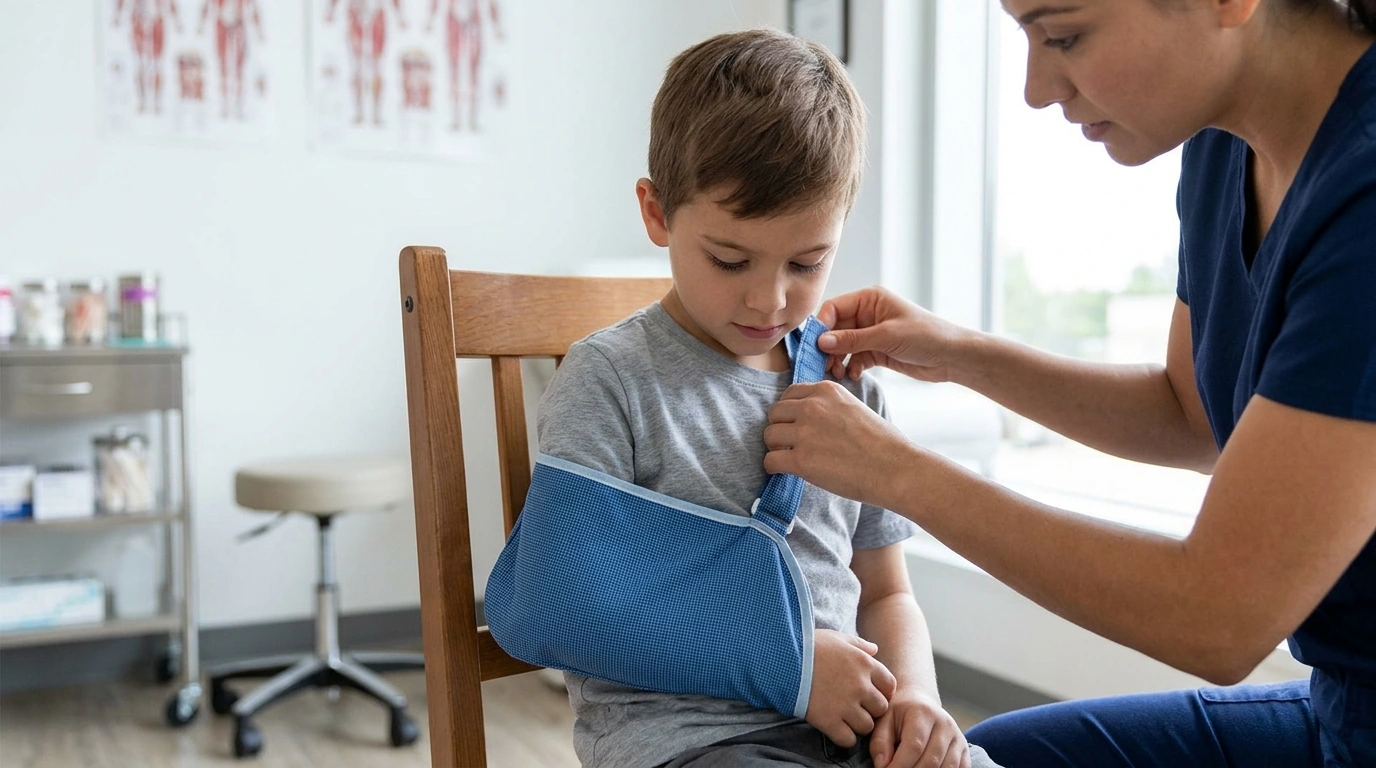
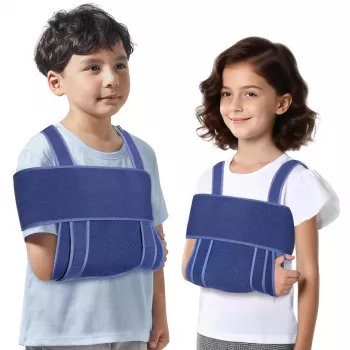
The best pediatric sling for a clavicle fracture is an adjustable arm sling that supports your child’s forearm and elbow comfortably while keeping the injured arm close to the body. A wide, padded shoulder strap and a soft, breathable pouch can make the sling easier to wear during everyday activities. Your child’s clinician should recommend the type of support and how long it should be used.
For many uncomplicated clavicle fractures, a simple sling provides support while the bone heals. A figure-eight brace is not automatically a better choice; use one only if your child’s clinician recommends it.
We recommend focusing on support and adjustability rather than extra straps or padding alone. Look for these practical features:
Place the injured arm fully into the pouch so the elbow rests at the back and the hand is supported. Adjust the strap until the forearm is roughly level or the hand sits slightly higher than the elbow. The sling should feel secure without pressing tightly against the neck or shoulder.
Make sure your child can move their fingers and that the hand stays warm and its usual color. Loosen or reposition the sling if it causes rubbing or uncomfortable pressure. Follow the clinician’s instructions about removing the sling and moving the arm; activity restrictions can vary with the injury.
Seek prompt medical attention if your child’s pain worsens, the hand becomes numb, cold, pale, or blue, or your child cannot move their fingers. A clavicle injury also needs urgent assessment if the bone appears to be pushing sharply against the skin or breaks through it.
For more guidance on choosing and adjusting a sling, explore our guide to kids’ adjustable arm sling fit and comfort.
Yes. Your child should generally be able to move their fingers while the sling supports the injured arm. Contact their clinician promptly if finger movement is difficult or the hand becomes numb, cold, pale, or blue.





Leave a comment